 Pegasus
TL;DR
- Direct expenses for a two-day regional show typically fall between £6,500 and £20,000.
- Key line items include equestrian centre hire, liability insurance, and affiliated officials such as judges and course builders.
- Using zero-cost software can save show organisers over £1,200 per event in administration fees.
Running a regional horse show in 2026 requires a realistic horse show cost breakdown that accounts for rising facility charges, insurance premiums, and official travel. For a typical two-day event with 100 to 150 horses, organisers should expect a base operating cost between £6,500 and £20,000, depending on the discipline and venue location. By focusing on high-impact areas like surface maintenance and officiating while leveraging modern technology to eliminate administrative overhead, show managers can maintain profitability without pricing out their local riding community.
The Fixed Costs: Venue, Officials, and Insurance
When you sit down to draft your horse show cost sheet, the largest line items are usually the least flexible. In the 2026 market, venue hire has stabilised, but fees now often include mandatory cleaning charges and specific paramedic or first-aid requirements that were elective a decade ago. We have seen many managers caught off guard by these peripheral costs.
Venue Hire and Utilities
For a regional equestrian centre with two arenas and temporary stabling, expect to pay between £1,200 and £3,500 per day. This usually covers the basic surface preparation and floodlights. However, many organisers forget to factor in the cost of water for dust suppression or the overtime pay for facility staff. If you are running a British Showjumping (BS) or British Dressage (BD) affiliated show, ensure your venue meets specific dimensional requirements for your classes to avoid late-stage fines or losing affiliation status.
Officials and Staffing
Qualified judges are the heartbeat of your show, but they come with a price tag. A regional-level judge typically costs £150 to £300 per day, plus mileage, accommodation, and a daily food allowance. Add in a steward or technical delegate (£200-£400 per day) and a qualified course builder (£300-£700 per day), and your officials bill can easily exceed £3,000 for a weekend when travel and VAT are included.
Insurance and Affiliation Fees
Public liability insurance is non-negotiable under the Animal Welfare Act 2006 and DEFRA guidelines. For a weekend event, a standard policy generally costs between £500 and £1,000. Additionally, if you are running an affiliated point-earning show, affiliation fees to organisations like British Eventing (BE) or the Pony Club can range from £100 to £400 per event.
Variable Costs: Rosettes, Surfaces, and Feed
Variable costs represent the areas where a show manager’s experience really shines. This is where you can often find the most significant savings without compromising the rider experience. At Pegasus, we tracked several ways to trim the fat:
- Rosettes and Awards: High-quality rosettes cost between £1.20 and £3.50 each. For a show with 50 classes and six rosettes per class (Red for 1st, Blue for 2nd, Yellow for 3rd, Green for 4th, etc.), that is at least £600. Many shows are now moving toward sustainable awards like grooming kits or gift vouchers for local tack shops to reduce waste.
- Surface Maintenance: If the venue does not provide a tractor and leveller, you may need to hire equipment (approx. £350 per weekend) and pay an operator. We have seen organisers save significantly by partnering with local machinery dealerships for a demo tractor in exchange for a sponsorship banner.
- Office Supplies: Printing 200 copies of a 10-page show programme, dozens of entry forms, and hundreds of judges’ cards can cost £250 or more in toner and paper. This is a prime area for a digital transition.
How Can You Reduce Your Horse Show Cost Without Cutting Quality?
One of the most effective ways to lower your show budget is to eliminate redundant administrative tasks. In the past, show secretaries spent hours manually entering data from paper forms, and organisers paid for expensive software licences or per-entry fees.
At Pegasus, we have observed that the easiest horse show software to use is often the one that removes the financial burden from the organiser. By using a platform that charges zero pounds in setup or licensing fees, you can reallocate that £1,000-plus savings into better championship sashes or improved arena footing.
Another strategy is to lean into online entries and rider payments. When riders pay through a secure digital portal, you eliminate the risk of bounced cheques and the hours spent in the show office on Sunday afternoon chasing down open accounts. This efficiency allows you to hire one less office staffer, saving roughly £150 per day in labour costs.
Why Does Modern Software Make Financial Sense for Your Budget?
It might seem counter-intuitive to think that adding tech could lower your budget, but the math supports it. Consider the traditional per-horse fee charged by older software systems. If you have 200 horses and the software takes £4 per horse, you are losing £800 before the first gate opens.
In our guide on the cheapest horse show management software in the world, we highlight how Pegasus treats software as a utility for the sport, not a tax on the organiser. When the software is free for you to use, your break-even point for the entire event drops significantly.
Digital Ring Management
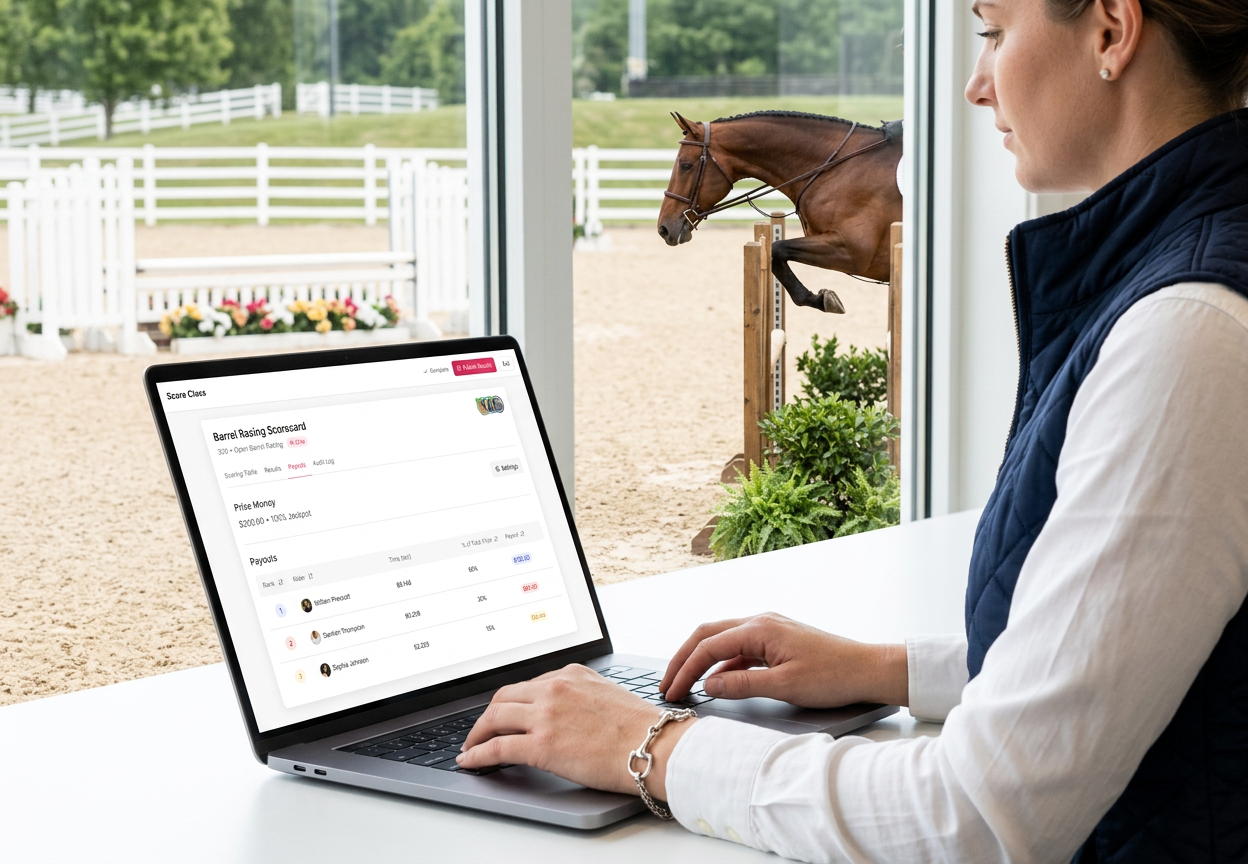
Paper-based systems require a runner to carry results from the ring to the office. By switching to live scoring and results, you keep the show moving faster. A show that runs an hour ahead of schedule saves on lighting costs, medical cover overtime, and staff fatigue. In a 2025 pilot programme, we saw regional shows reduce their total daylight operating hours by 15% simply by optimising their class scheduling and ring management.
What Is the Most Overlooked Horse Show Cost for Organisers?
Marketing and communication often fall through the cracks. In 2026, social media reach is no longer free if you want to target specific demographics in your county. Setting aside £150 to £400 for targeted ads can ensure your entry counts hit the volume needed to cover your fixed costs.
Furthermore, providing a space for your community to interact, such as Show Hub rooms, provides a level of engagement that keeps riders coming back. Customer retention is far cheaper than customer acquisition. A rider who has a seamless experience with their stall maps and stabling is likely to enrol in your next show, reducing your future marketing spend.
Conclusion
A regional horse show doesn't have to be a financial gamble. By understanding your fixed costs (like judges and insurance) and leveraging modern, zero-cost tools to handle the administrative load, you can run a professional, profitable event. Focus your spending where the riders feel it: on the surfaces, the officiating, and the atmosphere. Let technology handle the heavy lifting for your office team.
If you are ready to see how a digital-first approach can transform your show's bottom line, check out our full Pegasus feature overview to see how we help organisers stay in the black.