 Pegasus

TL;DR
- Record the score immediately when the judge speaks, then add the comment.
- Master standard dressage abbreviations like BTV and FWHAD to maintain speed.
- Use digital tools for real-time scoring to eliminate manual math and show office delays.
Dressage scribing is the essential link between a judge's evaluation and a rider's feedback, requiring high levels of focus and a basic understanding of the tests. A great scribe facilitates a smooth flow in the ring by translating verbal critiques into clear marks on a test sheet. By mastering standard terminology, staying one movement ahead, and using modern tools like Pegasus, you can ensure every dressage scoring entry is accurate and it guarantees that the show office receives results without any delay.
Why Does Precision in Dressage Scoring Matter?
As a scribe, you are the judge's hands. Your primary goal is to allow the judge to keep their eyes on the horse and rider at all times. If a scribe is slow or constantly asking for clarification, the judge may miss a transition or a specific movement, which directly impacts the fairness of the competition. Roughly 70 percent of delays at dressage shows can be traced back to transcription confusion between the ring and the office.
In our experience supporting shows across the country, we have found that the most common bottleneck in a dressage show is not the riding itself, but the data entry. When handwriting is illegible or comments are vague, the scorers in the show office have to stop their work to track down the judge for clarification. This creates a ripple effect that can delay the entire schedule by over 30 minutes. Whether you are using traditional paper or selecting the Best Software for Running a Dressage Show, your role is to be an invisible but high-speed bridge between the sand and the scoreboard.
How Can You Prepare for a Scribing Assignment?
Preparation begins long before the first horse enters at A. If you are new to a specific level (such as USEF Third Level or an FEI Grand Prix), take 10-15 minutes to read through the test sheets. Notice where the movements change quickly, such as a series of flying changes or a transition within a movement. At Pegasus, we have seen organizers significantly reduce stress by sending these tests to volunteers 48 hours in advance.
Essential Scribe Checklist
- Arrive Early: Be at the judge's box 15-20 minutes before the first ride to coordinate with your judge.
- Establish Rapport: Ask the judge how they prefer to give scores. Do they say the number first or the comment first?
- Check Your Tools: Ensure you have multiple pens (if using paper) or that your tablet is fully charged and connected to the local network.
- Verify the Order of Go: Check the rider's number against your sheet as they pass the judge's stand to ensure everyone is in the right place.
What Are the Best Practices During the Test?
Once the bell rings, the pace picks up. The most critical rule for accurate dressage scoring is to write the score first. If a judge says, "Nice active trot but a bit behind the vertical, 7.0," write the "7.0" immediately. Comments are valuable, but the score is what determines the placing and the final percentage.
Stay One Box Ahead
It is helpful to keep your finger or a stylus on the box for the current movement, but keep your eyes on the sheet to anticipate the next one. If you get lost, do not panic. Leave the box blank and move to the next movement the judge calls out. You can fill in the missing score during the exit at A or while the judge is completing the collective marks.
Use Standard Abbreviations
To keep up with fast-moving tests, you must use shorthand. Standardized shorthand helps the office interpret notes quickly. Common abbreviations include:
- ACT: Active
- BTV: Behind the vertical
- FWHAD: Free walk on a loose rein
- OBL: Obedient
- X: Centerline
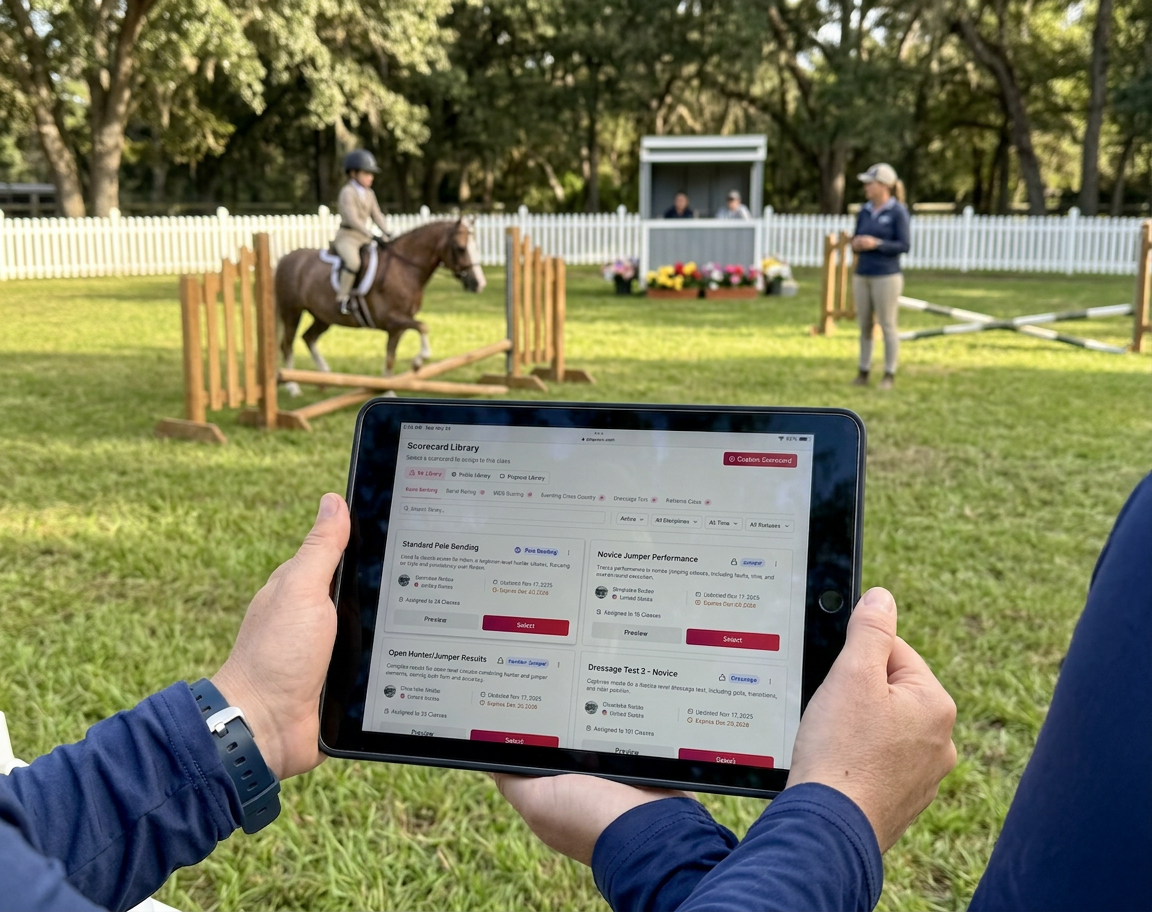
If you are using Pegasus for live scoring and results, many of these comments can be streamlined or selected quickly. The transition from paper to digital has significantly reduced the scribing fatigue we often see at long three-day shows.
How Can You Help the Scorers in the Office?
The relationship between the scribe and the scorers is vital. If a scorer cannot read a 4 versus a 7, the entire results table is compromised. When you finish a test, do a quick sanity check before handing it off to the runner or hitting submit. At many USEF shows, small errors in transcription can lead to 1-2 percent differences in final totals if not caught early.
Check that:
- Every movement has a score.
- Errors of course are clearly marked (usually a minus 2 for the first and minus 4 for the second).
- The judge has signed or digital-validated the sheet.
- Any half-points (e.g., 6.5) are clearly legible.
At Pegasus, we have seen organizers move away from the manual math of paper tests in favor of our automated tallying. By using our online entries and rider payments system, the rider's information is already synced, meaning the scribe only needs to worry about the numbers, not spelling the horse's name correctly.
How Does Digital Scribing Improve the Show Experience?
Traditional paper scribing involves a high risk of manual calculation errors. A scribe might miscalculate a total, or a runner might lose a sheet in a gust of wind. This is why more clubs are asking: What is the best horse show software for clubs? and looking toward digital solutions to modernize their operations.
When scribing digitally, the software calculates the percentages automatically as you go. This means that as soon as the judge completes the collective marks and the scribe hits "send," the results can be posted to the Show Hub for riders to see on their phones. This transparency creates a much better atmosphere at the show, as riders are not hovering around a corkboard waiting for a paper sheet to be pinned up. We have found that digital-first shows report 40 percent higher satisfaction rates from riders who value instant feedback.
Conclusion: The Professional Scribe
Scribing is one of the best seats in the house. It is a front-row clinic where you get to hear exactly what a judge is looking for in every movement. By being organized, using clear shorthand, and embracing tools for class scheduling and ring management, you go from being a volunteer to a vital asset to the show's success. Your judge will thank you, your scorers will love you, and the riders will appreciate the fast, accurate dressage scoring that helps them grow in their sport.