 Pegasus

TL;DR
- A horse show schedule or prize list serves as your official legal contract and primary marketing brochure.
- Transparent fee schedules and precise class specifications reduce office disputes and build rider trust.
- Digital-first schedules with live entry links save thousands in printing costs while boosting early registrations.
- Well-defined refund and stabling policies protect your event's financial health and exhibitor satisfaction.
Mastering the horse show schedule (or prize list) is a critical task for any organiser, as this document functions as the legally binding contract between your competition and the exhibitor. A well-structured horse show schedule outlines the primary divisions you might offer, specifies judge assignments, and provides a transparent breakdown of fees, from a €15 office charge to €150-€200 weekly stable rates. By treating your schedule as a comprehensive roadmap rather than just a list of classes, you ensure regulatory compliance with bodies like Horse Sport Ireland (HSI) or Showjumping Ireland (SJI) and significantly reduce the administrative burden on your show secretary.
Why is the Schedule the Most Important Document You'll Write?
In our experience working with hundreds of show managers, we have seen that the schedule is the first point of contact for a potential exhibitor. It is your ultimate marketing tool. If it is confusing, cluttered, or missing vital information, trainers and yards will likely skip your event in favour of one that feels more professional. Numbers tell the story here. A show that releases a clear, digital schedule 60 days in advance often sees a 20 per cent higher early entry rate compared to shows that wait until the 30-day mark.
Beyond marketing, the schedule is a legal protection for your organisation. According to the How to Run and Horse Show course, the schedule defines the class specifications, entry requirements, and the specific governing body rules that apply. If a dispute arises regarding a placing or a refund, the schedule is the first document referenced by judges and stewards. We have seen shows avoid major liability issues simply by including one paragraph of specific terms and conditions mandated by Irish law regarding equine activities.
What sections must be included in a professional schedule?
To ensure you cover all logistical bases, your schedule should be structured logically. We recommend the following core sections to maintain a professional standard:
- Show Officials and Staff: Clearly list your judges, course designers, stewards, and stable managers. Riders often choose shows based on the course designer or who is judging the ring.
- General Information and Rules: This includes the date, venue (e.g., Cavan, Millstreet, or local grounds), entry deadlines, and which rulebook (HSI, SJI, Dressage Ireland, or Eventing Ireland) is being followed.
- Fee Schedule: Do not just list entry fees. Be transparent about office fees, medical cover fees (often €5-€10 per rider), stabling costs, and any late entry penalties. Transparency here prevents friction at the show office.
- Specifications for Classes: For unaffiliated schooling shows, this is where you define things like 80cm fence heights or pony height limits (in hands). For sanctioned shows, ensure these match the national federation requirements exactly.
- Stabling and Bedding: Use a clear section to explain how to reserve stables and where to order bedding (shavings or straw). You can streamline this by using stall maps and stabling tools to show availability in real time.
How do you optimise your schedule for digital entries?
Gone are the days of printing hundreds of booklets and posting them to riding clubs and yards. Modern organisers now use digital-first distributions to save up to €2,000 in printing and postage costs. However, a digital schedule needs to be more than just a PDF upload.
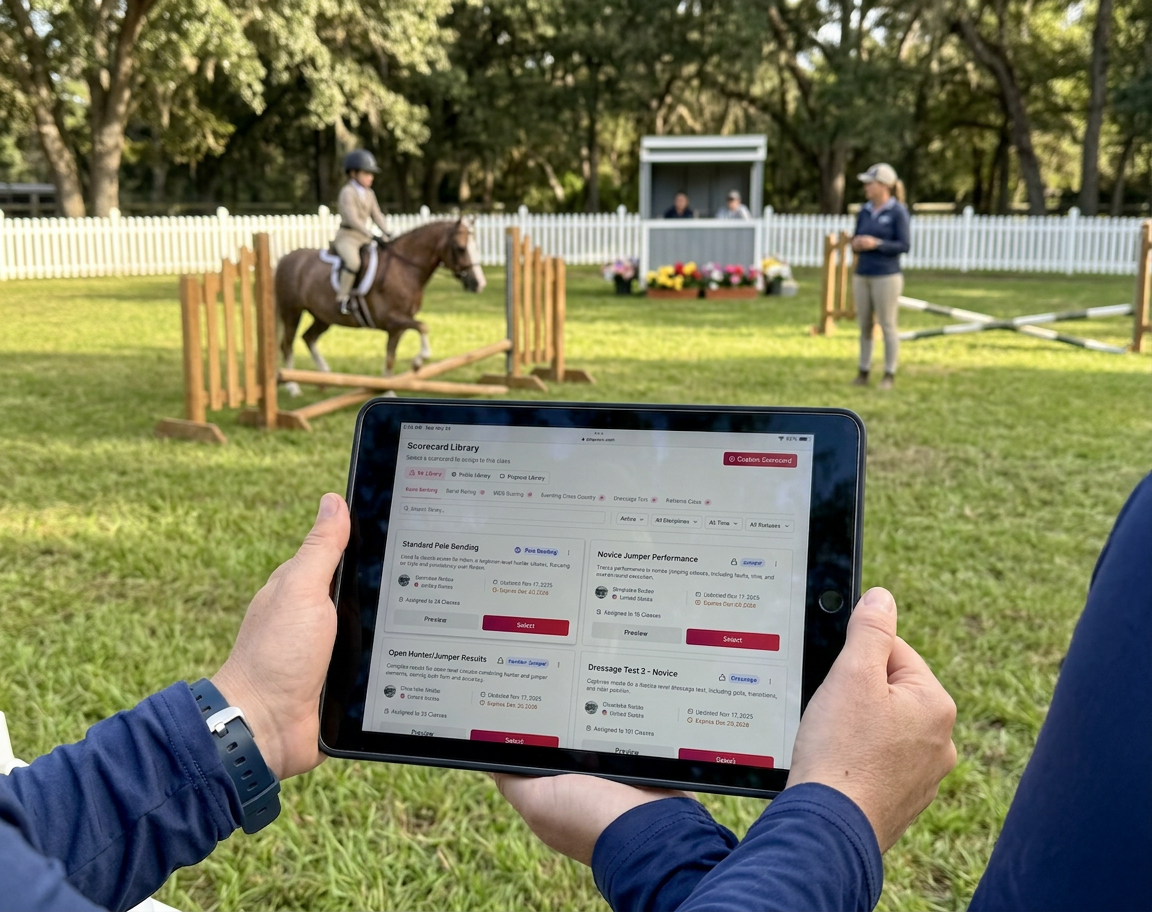
When we built the Pegasus Show Hub, we focused on making the transition from reading a schedule to submitting an entry as seamless as possible. Your digital document should include active links. For example, your "Enter Now" button should lead directly to your online entries and rider payments portal.
If you are using modern software, you can also link the schedule directly to live scoring and results. This allows riders to see the schedule, enter the class, and eventually view their results all through a single digital ecosystem. This level of organisation is how you build a recurring show series that exhibitors return to year after year. We have seen Irish organisers use these digital integrations to bridge the gap between their schedule and their real-time horse show scoring, keeping everyone informed from morning till the final clear round.
Why is a clear refund policy vital for your budget?
One of the most common points of friction in Irish horse show management is the refund process. Horses get injured, boxes break down, and plans change. If your schedule says "No refunds," you might scare away a significant portion of your potential entries. Conversely, if you are too lenient, you risk your show's financial stability.
We suggest a tiered approach that we have seen work for shows across Ireland:
- Full refund (minus a standard €10-€20 admin fee) before the closing date.
- Refund of class fees only with a valid veterinary or medical certificate after the closing date.
- No refunds once the show has started or the horse is on the grounds.
Clearly stating these rules in bold text within your horse show schedule saves your show secretary hours of difficult conversations during show week.
How can you promote your schedule to increase entries?
Once the document is finalised and uploaded, the work is only half done. You need to get the schedule in front of trainers and riders.
- Email Blasts: Send a direct link to your previous year's list of exhibitors. Use reports and post-show analytics from your horse show software to identify your most loyal customers.
- Social Media Teasers: Post screenshots of the new Grand Prix prize fund or a photo of the judge lineup with a link to the full PDF on Facebook and Instagram.
- Partner Networks: Utilise the Pegasus partner network and local associations to cross-promote your document on their calendars.
Conclusion: The Schedule as a Professional Standard
A professional schedule reflects a professional show. By taking the time to verify every class code, every fee, and every staff name, you are signalling to the Irish equestrian community that your event is well-run and worth their entry fee.
If you find the manual process of updating these documents every year tedious, consider how modern horse show software can help store your class data and generate programmes automatically. The less time you spend fixing typos in a document, the more time you can spend ensuring your rings are ready and your footing is perfect for start of the first class.