 Pegasus
TL;DR
- Quality footing is a primary safety requirement for equine welfare and athlete longevity.
- Consistency across the arena surface prevents soft tissue injuries and performance drops.
- Digital scheduling helps maintain regular drag breaks without disrupting show flow.
Modern horse show footing management is the process of maintaining arena surfaces to ensure consistent grip, cushion, and rebound for equine athletes. High-quality footing is not just an aesthetic choice; it is a critical safety component that impacts horse welfare and event reputation. By adhering to modern standards for moisture control, compaction, and grooming, show organizers can significantly reduce the risk of soft tissue injuries while providing a professional environment that encourages top-tier riders to return season after season.
Why is Horse Show Footing Management Essential for Safety?
The footing under a horse's hooves is the most important piece of equipment in the arena. If the surface is too hard, the concussive forces on a horse's joints and bones increase dramatically. If it is too deep or shifty, the risk of suspensory and tendon strain skyrockets. We have seen organizers prioritize many aspects of show production, but according to the Course: How to Run and Horse Show, arena maintenance is a non-negotiable pillar of facility management.
The Mechanics of the Surface
Effective footing provides three specific mechanical properties: firm support for the landing phase, enough slide for the impact phase, and energy return for the take-off. Modern surfaces often utilize a mix of silica sand and synthetic fibers or felt to mimic these natural requirements.
When footing fails, it usually happens because of unevenness. A "bottom" that has been worn away in the corners or around the jumps creates an unpredictable surface. This is why consistent grooming throughout the day is as important as the initial installation.
How Often Should Arenas be Dragged During a Show?
The frequency of arena maintenance depends on the volume of horses and the specific discipline. For example, a heavy jumper class with 60 entries will displace more material than a flat class of 15 riders. In our experience, high-traffic events should aim for a drag break every 25-30 horses to maintain the integrity of the tracks.
Managing the Schedule with Maintenance
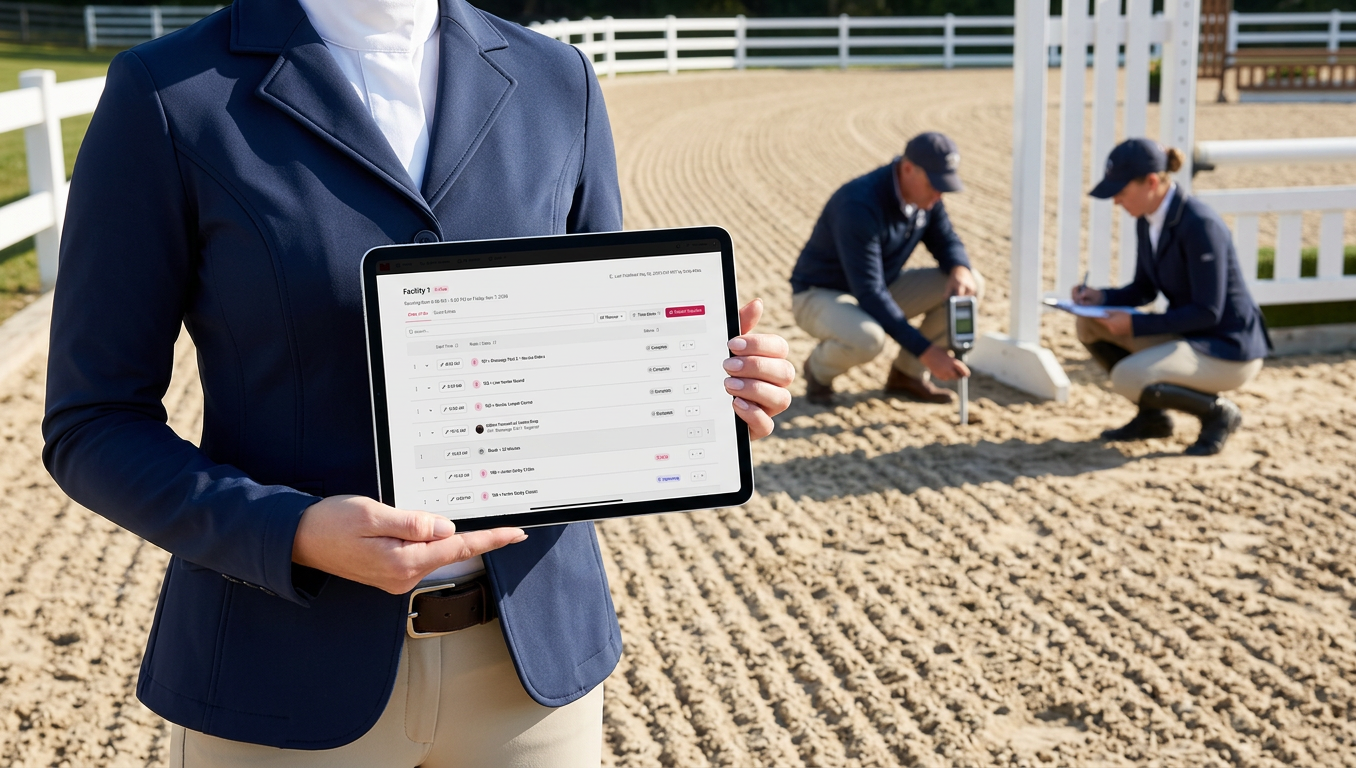
One of the biggest challenges for organizers is the friction between keeping the show on time and stopping for the tractor. We cover the logistics of this balance in Modern Horse Show Ring Management: Keeping Your Event on Schedule. By using class scheduling & ring management tools, you can build drag breaks directly into the public order of go. This transparency allows trainers and riders to know exactly when the ring will be closed, preventing the chaos of a sudden, unannounced maintenance break.
Technical Standards for Footing Moisture
Water is the "glue" that holds modern footing together. Without adequate moisture, the sand particles lose their cohesion, leading to a "loose" or "dusty" ring. Dust is not just a nuisance; it is a respiratory hazard for both horses and humans.
Monitoring Moisture Levels
- Uniformity: Use a sprinkler system or water truck that provides even coverage. Dry spots in the arena lead to inconsistent footing, which is a leading cause of tripping.
- Depth of Hydration: Ensure the water reaches the base. Surface-level watering creates a slick top layer over a hard, dry bottom, which is incredibly dangerous.
- Drainage: A well-built arena should handle rainfall without pooling. If you are managing an outdoor circuit, your pre-show audit must include a drainage test to avoid washouts.
Training Your Grounds Crew
A tractor is only as good as the person driving it. Your grounds crew needs to understand the specific needs of the discipline they are grooming for. A hunter ring may require a smoother, more aesthetic finish, while a reining pen requires a very specific depth of loose material over a hard base to allow for sliding stops.
Grounds crew management is a vital part of horse show staff management and digital volunteer coordination. Clear communication between the show office and the tractor drivers ensures that rings are refreshed at the optimal times.
Key Maintenance Tips for Staff
- Vary the Pattern: Do not drag the arena in the same pattern every time. This prevents the buildup of material against the rails (the "wall effect").
- Check the Depth: Use a simple measuring tool to check the depth of the footing in high-traffic areas like the in-gate and the landing side of jumps.
- Equipment Choice: Ensure you are using the right groomer for the specific type of footing. Synthetic footing requires a different tine depth than traditional dirt or clay.
The Economic Impact of Good Footing
Investing in modern horse show footing management has a direct ROI. Riders are increasingly savvy about where they spend their entry fees. If a facility gains a reputation for "bad ground," entries will dwindle. Conversely, a show known for having the best footing in the region can often command higher stall fees and larger class sizes.
Beyond entry fees, proper maintenance extends the life of your arena surface. Synthetic footing is an expensive investment. By managing moisture and grooming correctly, you prevent the fibers from breaking down prematurely, saving thousands in replacement costs over the long term.
Communicating Quality to Exhibitors
You can use Show Hub rooms to update exhibitors on ring conditions or maintenance schedules in real-time. This level of communication builds trust and demonstrates that you are prioritizing their horse's safety above all else. When riders feel the ground is safe, they are more likely to ride aggressively and enjoy the competition, which creates a better atmosphere for spectators and sponsors alike.
Conclusion
Modern horse show footing management is a blend of science, logistics, and horsemanship. By treating the arena surface as a dynamic asset that requires constant monitoring, you protect the athletes and the financial health of your event. Whether you are running a local schooling show or a major rated circuit, the ground underfoot will always be the foundation of your success.