 Pegasus
TL;DR
- Effective ring management saves hundreds in overtime fees and prevents trainer burnout.
- Replace paper clipboards with real-time digital orders of go to eliminate redundant communication.
- Enforce the 3-horse-in-hand rule to keep rings running smoothly.
- Use data from previous seasons to build realistic class timing estimates.
Modern horse show ring management is the practice of coordinating horses, riders, and staff to ensure classes run efficiently without unnecessary delays. To keep your event on schedule, you must synchronize the show office, the in-gate, and the announcer using real-time data and clear communication protocols. By reducing dead time between rounds and proactively managing trainer conflicts, show managers can improve the exhibitor experience while controlling labor costs and facility fees. Success relies on a combination of experienced staff and digital platforms that provide instant visibility across multiple rings.
Why Does Ring Efficiency Matter for Your Bottom Line?
If you have ever sat through a 20-minute gap because a trainer was stuck at another ring, you know how quickly a schedule can unravel. Time is the most expensive commodity at a horse show. We have seen organizers lose upwards of $500 per hour in overtime costs for EMTs, judges, and lights simply because of poor ring flow.
Beyond the finances, riders and trainers value their time. A show that consistently runs until 9:00 PM due to avoidable delays will struggle with retention. Efficient class scheduling and ring management is not just a logistical necessity; it is a customer service priority. According to the Course: How to Run a Horse Show (Lesson 21), maintaining schedule efficiency is one of the most visible markers of a professional event. When you manage a multi-ring facility, even a 5% increase in efficiency across 3 rings can save you hours of staff labor by the end of a long weekend.
How Can You Prevent Common Gate Delays?
Gate delays are usually the result of information gaps. If a rider does not know they are 3 out, they will not be at the gate. If the in-gate person does not know a rider has scratched, they will wait for a horse that is never coming.
The Three-Horse-In-Hand Rule
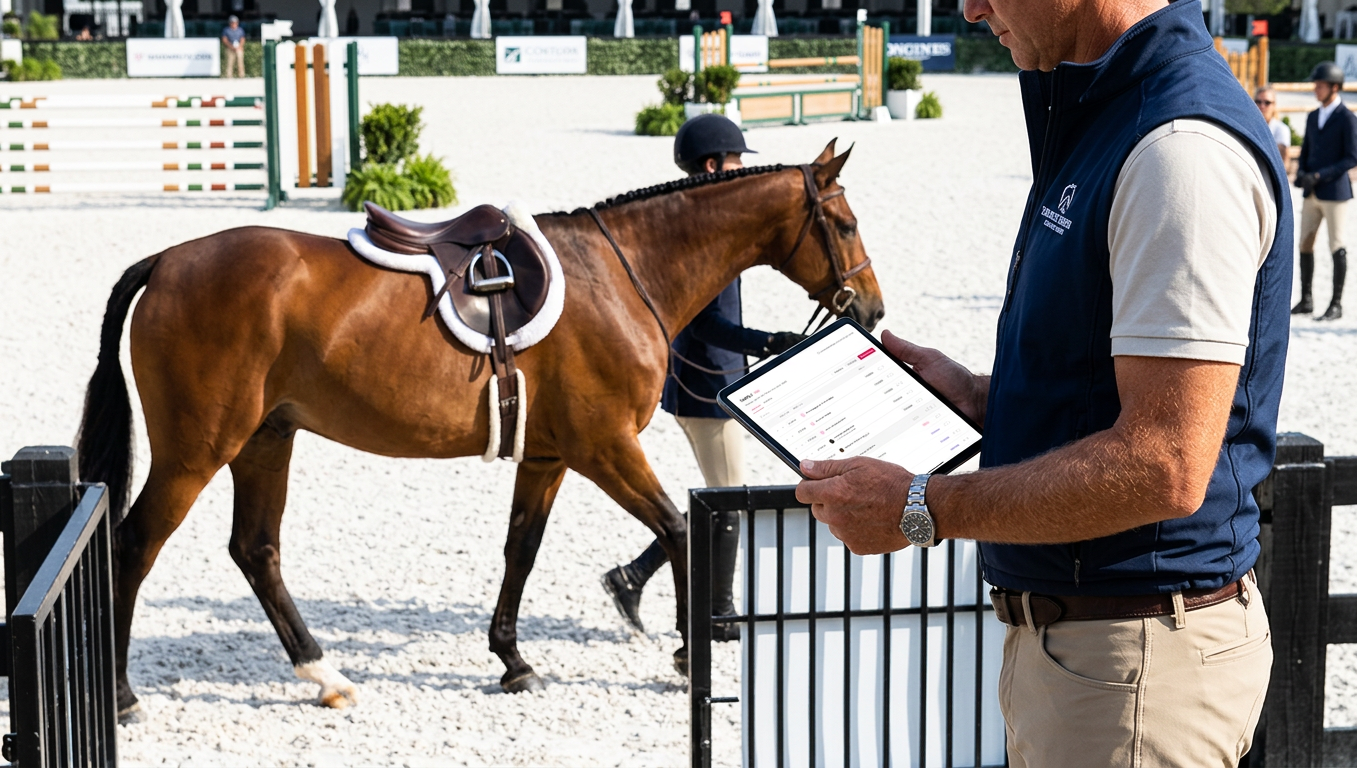
Your in-gate person should always have 3 horses ready to go: one in the ring, one on deck, and one in the hole. This creates a buffer against equipment failures or last-minute tack changes. If your gate person is only looking at the very next horse, any minor hiccup becomes a 5-minute dead period in the ring. During our last show season, we found that rings strictly enforcing this rule finished up to 45 minutes earlier than those that did not.
Digital Order-of-Go Management
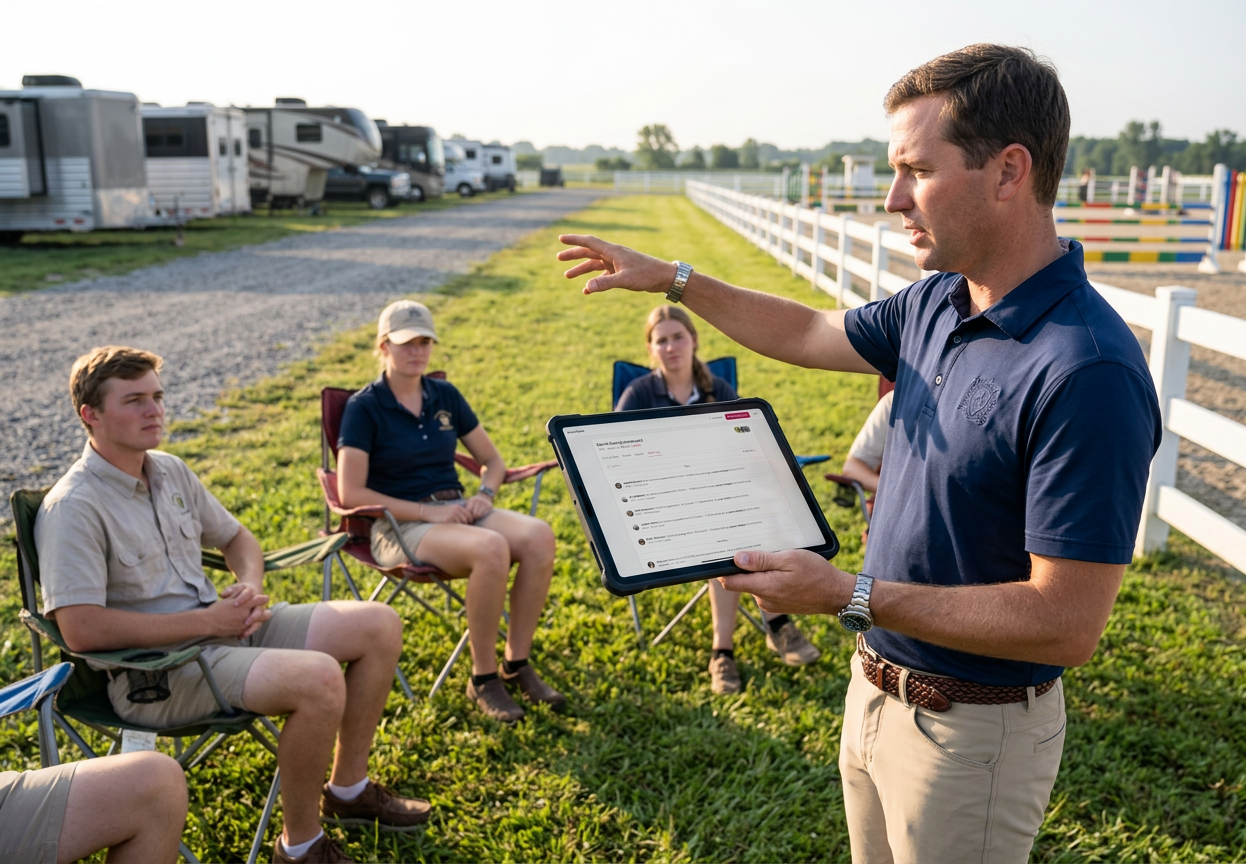
Moving away from paper clipboards is the fastest way to speed up your day. When you use live scoring and results, the in-gate staff can update the status of a class instantly. Trainers can check their phones from the schooling area to see exactly who is in the ring. This level of transparency reduces the number of people hovering at the gate asking, "How many more until me?" For organizers transitioning from local events, we covered this in our guide on how to run your first schooling show.
What are the Best Communication Tools for Multi-Ring Shows?
Clear communication is the backbone of modern horse show ring management. In our experience, relying solely on PA systems is a mistake. On windy days or in large facilities, riders in the stalls often cannot hear announcements clearly.
- Digital Messaging: Use tools like Show Hub rooms to blast updates about ring holds or class changes to all participants simultaneously.
- Radios and Headsets: Ensure your in-gate, announcer, and office are on a dedicated channel. Use discrete headsets so spectators do not have to listen to staff chatter.
- Real-Time Office Sync: The office should be able to push adds and scratches to the gate person's tablet immediately. We covered how this digital flow prevents errors in our guide on real-time horse show scoring benefits.
Managing Trainer Conflicts Without Stopping the Show?
Trainer conflicts are the leading cause of holds in the horse show world. A trainer with 5 riders in Ring 1 and 3 riders in Ring 2 cannot be in 2 places at once. During a typical USEF or AQHA sanctioned event, these conflicts can account for over 60 minutes of total idle time per ring if not managed properly.
To handle this, empower your in-gate staff to make decisions. If a trainer is truly stuck, the gate should have the authority to move a rider down the order rather than holding the entire class. However, this only works if you have a clear policy in your prize list. If you haven't updated yours recently, check out our modern guide for organizers on prize lists to ensure your conflict policies are legally sound and easy to enforce.
How Should You Train Your In-Gate Staff?
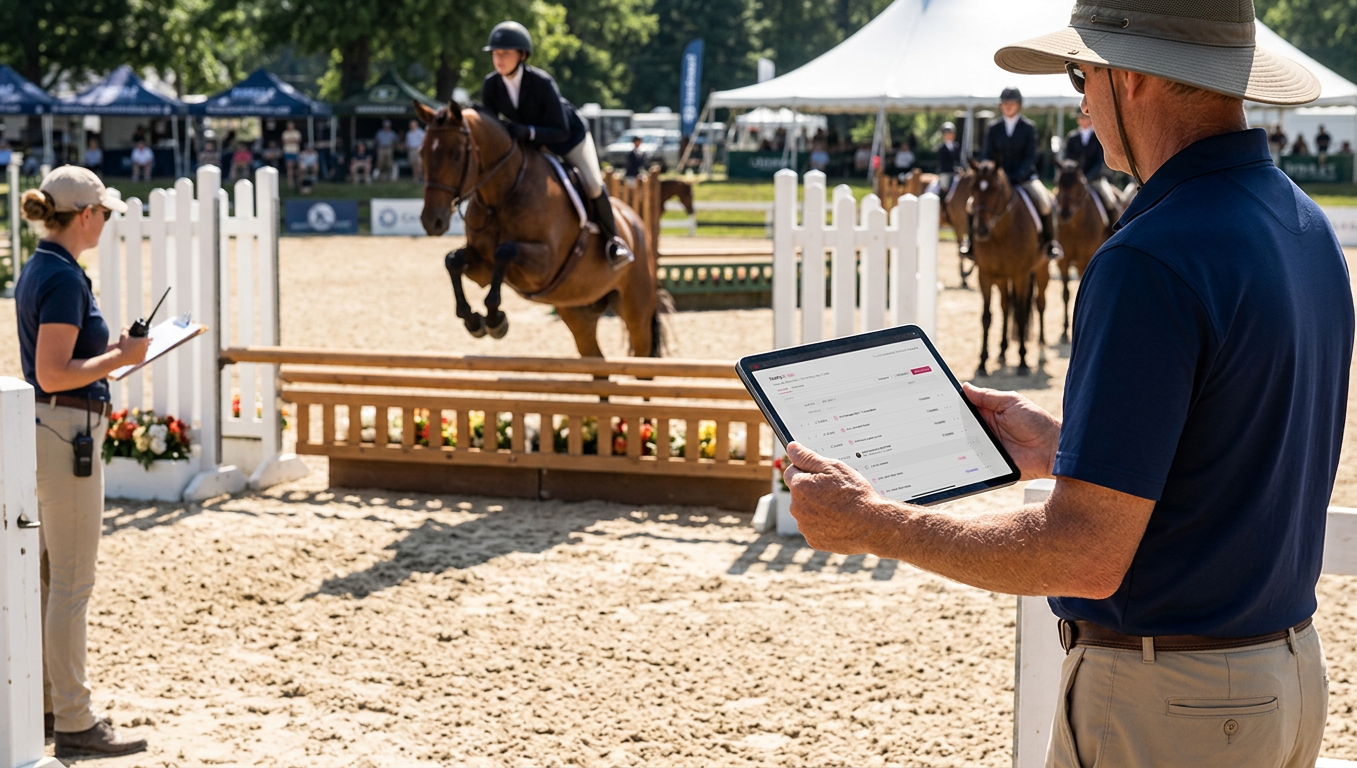
The in-gate person is the air traffic controller of your event. They need more than just a list of names; they need soft skills and authority.
- Assertiveness and Professionalism: They must be able to tell a high-profile trainer "no" when a hold is unreasonable, while remaining polite.
- Conflict Resolution: When 2 rings are conflicting, the in-gate staff should communicate with each other to decide which ring takes priority based on the number of horses remaining.
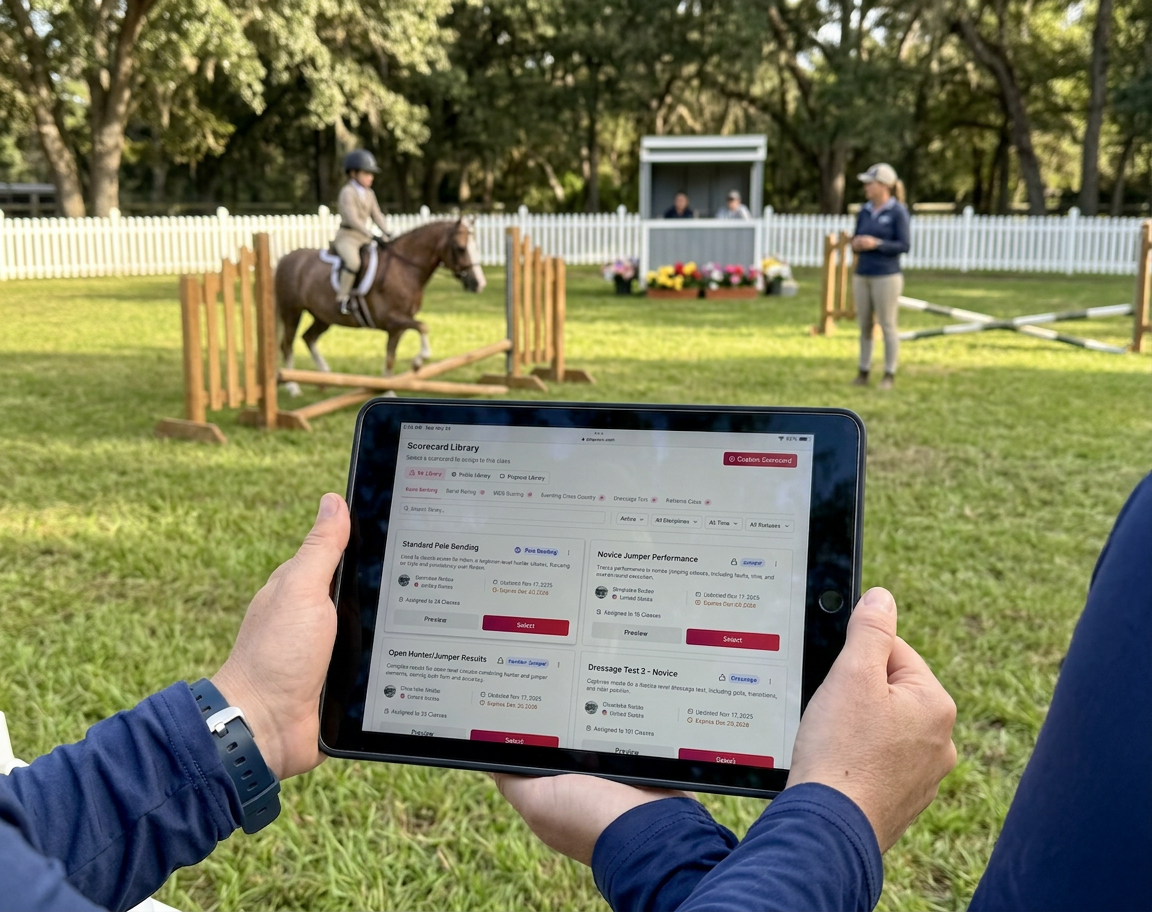
- Technology Literacy: They should be comfortable using an iPad or tablet to check in riders and log results. Using online entries makes this easier as the data is already in the system when the groom arrives at the gate.
Can Post-Show Data Improve Future Ring Efficiency?
After the show is over, look at your reports and post-show analytics. How long did each class actually take? Did the 2 foot 6 inch Hunter Division run 30 minutes over every day?
By comparing your scheduled start times to the actual completion times logged in your software, you can build more realistic schedules for your next event. If you manage a series, this data is gold. It allows you to adjust ring assignments or start times to ensure you aren't paying staff for 3 hours of overtime on a Sunday afternoon. In Lesson 35 of the How to Run a Horse Show course, we highlight that accurate financial forecasting depends entirely on accurate time management.
Running a tight ship requires the right culture and the right tools. When your ring management is modern, efficient, and transparent, everyone wins-from the facility owner to the pony rider waiting for their very first class.