 Pegasus
TL;DR
- Create a designated check-in window to prevent trailer bottlenecks.
- Use digital stall maps to guide exhibitors directly to their barns.
- Validate health papers and biosecurity documents before the horse steps off the trailer.
Optimizing horse show arrival logistics is the most critical step in setting the tone for a professional, high-quality event. When managing major circuits, the arrival phase involves coordinating hundreds of horse trailers, verifying health credentials, and ensuring smooth stall assignments without creating traffic gridlock. By implementing pre-arrival digital check-ins and structured trailer flow patterns, organizers can reduce exhibitor stress and improve safety across the showgrounds from the very first hour.
Why does arrival logistics matter for show reputation?
First impressions are hard to overwrite. For many exhibitors, the arrival process is their first physical interaction with your management team. If they spend three hours idling in a trailer queue or get blocked by a jackknifed rig in a narrow driveway, their satisfaction levels drop before they even hit the show ring.
We have seen organizers at major Hunter/Jumper circuits and Quarter Horse shows transform their exhibitor feedback scores simply by fixing the 'first mile' of the event. A smooth arrival indicates that the management is organized, respects the time of the trainers, and prioritizes the welfare of the horses being transported.
Mapping the 'In-Gate' for Trailers
Just as you manage the flow of a schooling ring, you must manage the flow of your property entrance. You should create a one-way loop for all arriving haulers. Avoid any layout that requires large rigs to back up or make tight U-turns. In our guide on optimizing horse show traffic flow, we discuss how layout impacts safety. For arrival day, this means clear signage and dedicated 'arrival lanes' that are kept free of parked spectator cars.
How to handle biosecurity and health paper verification?
In the modern showing environment, biosecurity is not optional. Major circuits now require Proof of Vaccination (EHV-1/4) and Coggins tests within specific windows. Waiting until the horse is at the stall door to check these papers is a recipe for disaster.
- Pre-Upload Documents: Use your show management software to allow riders to upload health papers during the online entry process.
- The Trailer-Gate Check: Establish a checkpoint at the entrance. Staff should verify that the horse on the trailer matches the papers provided before the ramp ever drops.
- Thermal Monitoring: For high-stakes circuits, implementing a temperature log requirement upon arrival can prevent an outbreak before it starts.
Digital Stall Assignments and Maps
One of the biggest bottlenecks in arrival logistics is the 'where do I go?' factor. When a trainer arrives with twenty horses, they need to know exactly which barn and which stalls are theirs.
At Pegasus, we recommend using digital stall maps that can be shared via a mobile link. Instead of the trainer having to park their rig and walk to the show office to find a paper map, they can pull the assignment up on their phone the moment they pull through the gates. This allows them to drive directly to their designated unloading area, keeping the main thoroughfares clear for the next hauler.
The Role of the Stabling Manager
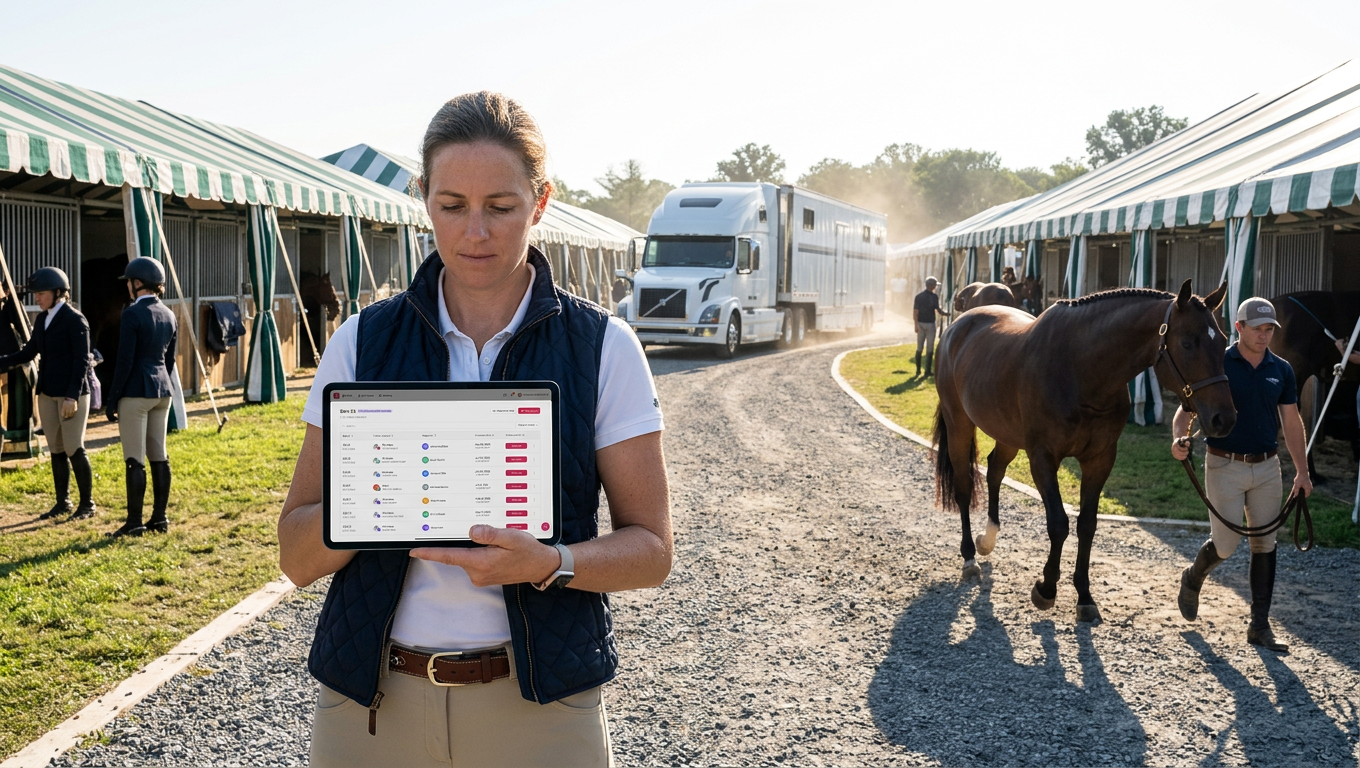
Your stabling manager should be mobile during the peak arrival windows. Equipping your staff with iPads or tablets allows them to update stall status in real-time. If a stall needs extra shavings or a repair before a horse moves in, the manager can flag it digitally and notify the grounds crew immediately. This level of responsiveness is what separates a local schooling show from a premier circuit experience.
Managing the 'Sunday Rush' and Heavy Haulers
Most major circuits see a massive influx of trailers on Sunday evening or Monday morning. To optimize horse show arrival logistics during these peak times, consider the following tactics:
- Scheduled Arrival Slots: For events with over 500 stalls, ask large professional barns to sign up for an arrival window. This staggers the load on your staff and your driveway.
- Unloading Zones: Designate specific areas for unloading that are separate from long-term trailer parking. Once the horses and gear are off, the trailer must move to a remote lot to keep the barn aisles accessible for emergency vehicles.
- Night Arrivals: If your facility allows, having a 'Night Owl' staff member can help trainers who are traveling long distances and arrive outside of standard office hours.
Enhancing the Trainer Experience
Trainers are the primary customers for stabling logistics. They are often managing multiple clients, nervous horses, and exhausted staff. Small touches in the arrival process go a long way. Providing a 'Welcome Packet' at the arrival gate-containing the week's class schedule, a map of the nearest feed store, and emergency vet contact info-shows that you have anticipated their needs.
For more on managing the staff required to pull this off, see our post on horse show staff management.
Conclusion: Logistics as a Growth Strategy
Optimizing horse show arrival logistics is an investment in the longevity of your show series. When exhibitors know that coming to your event is easy, they are more likely to return for the next circuit. By leveraging digital tools for paper verification and stall mapping, you reduce the manual workload on your office staff and create a safer, more professional environment for everyone involved.