 Pegasus
TL;DR
- Pre-ordering is the key to accurate inventory and reduced waste.
- Digital tracking prevents the 'Sunday morning leak' where unrecorded bags disappear.
- Strategic pricing and efficient delivery routes can turn supplies into a major revenue driver.
Optimizing horse show feed and bedding logistics requires a shift from reactive deliveries to data-driven inventory management. By implementing pre-show ordering systems and real-time digital tracking, event managers can eliminate the common financial leaks caused by unrecorded sales and inefficient labor. When you treat shavings and hay as a high-margin retail department rather than just a facility necessity, you improve the exhibitor experience while significantly boosting your show's bottom line.
Why Feed and Bedding Logistics Matter?
For many organizers, the 'Feed and Bedding' tent is a source of constant stress. It is usually the last thing set up and the first place where money goes missing. In our experience working with multi-week circuits, bedding can account for up to 15 percent of gross ancillary revenue, yet it often has the highest rate of 'shrinkage' due to poor record-keeping.
Beyond the numbers, the logistics of getting five bags of pine shavings to Stall B-12 at 6:00 PM on a Friday impacts your reputation. If a trainer has to walk to the office three times to remind your staff about an order, their overall satisfaction drops. As we discussed in our guide on Streamlining Horse Show Arrival Logistics, the first few hours a team spends on your grounds sets the tone for the entire event.
How Can You Automate Feed and Bedding Orders?
Moving away from paper slips is the first step toward profitability. The old way involved a trainer scribbling an order on a napkin or a whiteboard at the office, which then had to be radioed to a tractor driver. This system is prone to human error and lost revenue.
Implement Pre-Show Ordering
The most efficient way to manage inventory is to know exactly what you need before the first trailer arrives. By using online entries and rider payments, you can require exhibitors to select their initial bedding count during the registration process. This allows you to:
- Negotiate better bulk rates with suppliers like Zoetis or local mills based on hard numbers.
- Pre-stage shavings in stalls before arrival, reducing the day-one labor spike.
- Predict the exact staff count needed for the arrival weekend.
Digital Tracking at the Barn Door
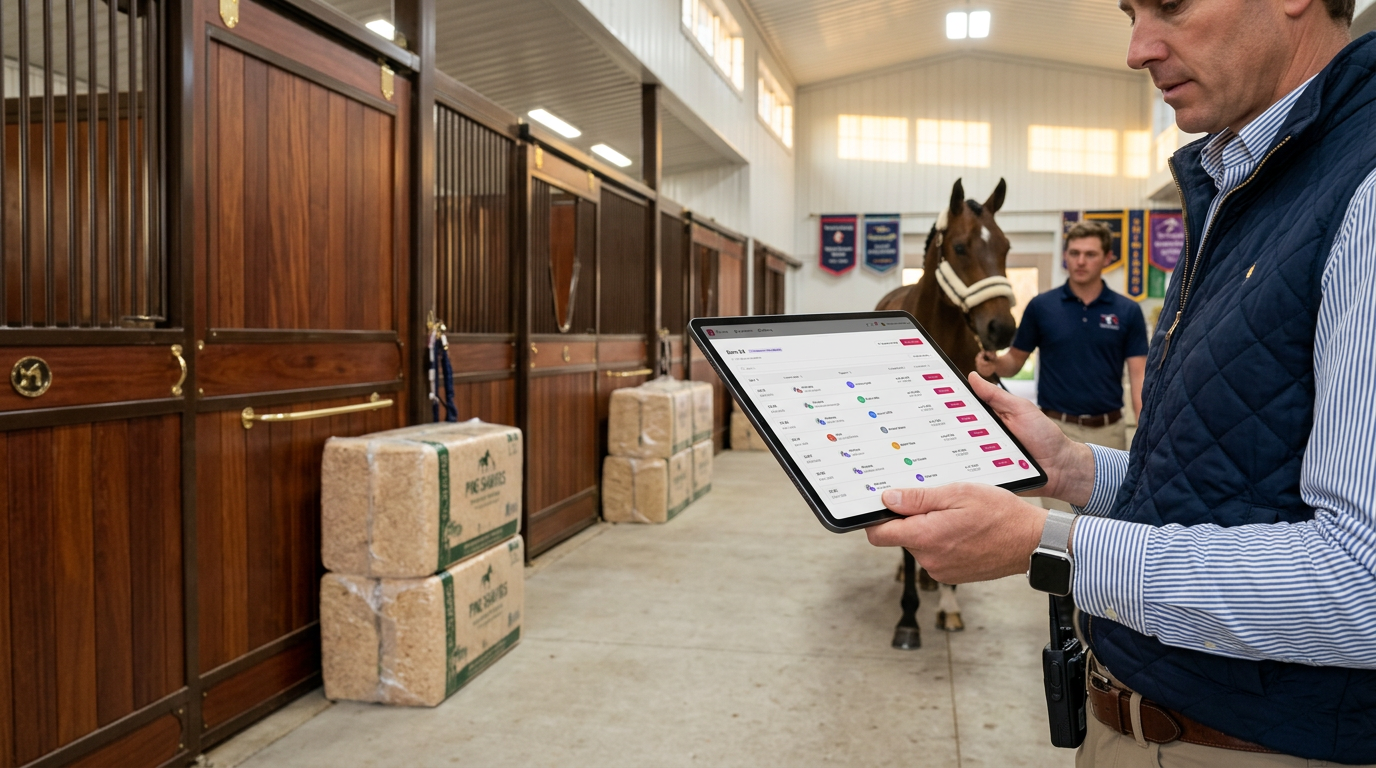
When a trainer needs more hay mid-week, the order should be placed via a mobile device and immediately synced to a master fulfillment list. This ensures that every bag leaving the storage area is tied to a specific back number or trainer account. At Pegasus, we have seen organizers reduce 'lost' inventory by 20 percent simply by requiring a digital confirmation at the point of delivery.
What are the Best Practices for Inventory Control?
Managing physical inventory in a dusty, high-traffic environment is challenging. You need a system that survives the chaos of a horse show.
- Designated Storage Zones: Do not just drop a flatbed of shavings in the middle of a barn aisle. Use a central, secure hub and smaller satellite stations for large facilities to reduce travel time for your delivery crew.
- The 'Empty Bag' Audit: Some managers require delivery staff to collect a plastic tie or a specific marker from the stall to prove delivery. A better modern solution is a timestamped photo uploaded to the show management software.
- Standardized Units: Stick to one or two types of shavings and hay. Offering five different types of bedding sounds like great customer service, but it creates a logistical nightmare that eats into your margins.
How to Price Supplies for Maximum ROI?
Profitability is not just about selling more; it is about understanding your total cost of goods sold (COGS). This includes the purchase price, the labor to unload the truck, the labor to deliver to the stall, and the equipment fuel.
Many shows fail to account for the labor cost of the 'extra' deliveries. A trainer who orders one bag of shavings five times a day is significantly more expensive to serve than a trainer who orders twenty bags once. Consider implementing a 'minimum delivery' count for mid-show orders or a small delivery fee for orders placed after a certain time each day. This encourages trainers to be more organized, which in turn makes your stall management more predictable.
Using Data to Forecast Future Needs
Once the show is over, your data should tell a story. Review your post-show analytics to answer these questions:
- Which barns had the highest consumption per stall?
- What was the peak time for delivery requests?
- How much inventory was left over, and what did it cost to store or return it?
In Lesson 35 of the Pegasus Show Management Course, we highlight that financial reporting is the heartbeat of event growth. If you do not know your exact margin on a bag of shavings, you cannot accurately budget for facility improvements or prize money increases.
Closing the Loop: The Sunday Office Rush
One of the biggest friction points in show management is the checkout process. If your feed and bedding records are not updated in real-time, exhibitors will be stuck waiting at the office while a secretary tries to verify if they really did get those three extra bales of coastal hay. By integrating your delivery logs directly with your financial reporting tools, you can ensure that the bill is ready the moment the rider walks in, effectively eliminating the Sunday office rush.
Effective logistics turn a chore into a profit center. When you empower your staff with digital tools and your exhibitors with easy ordering, you create a professional environment that keeps trainers coming back season after season.