 Pegasus

TL;DR
- Stabling often represents the largest overhead and highest potential revenue for multi-day events.
- Digital stall maps reduce office labor by up to 40 percent and eliminate manual booking errors.
- Tiered pricing and strict reservation deadlines protect your margins against last-minute cancellations.
Optimizing horse show stall management requires a balance of logistical precision and strategic financial planning to ensure event profitability. By leveraging modern digital tools like real-time stall maps and automated billing, show managers can eliminate the common bottlenecks associated with paper charts and manual assignments. Efficient stall management not only improves the exhibitor experience but also secures a critical revenue stream, allowing organizers to better predict bedding needs and labor costs while maximizing the utility of every square foot of the showgrounds.
Why Does Stall Management Impact Your Bottom Line?
In our experience working with circuits across North America, we have seen that stabling is rarely just about providing a roof for a horse. It is a complex financial ecosystem. Between the cost of renting temporary structures, the labor for setup and teardown, and the variable cost of shavings, a poorly managed barn area can quickly erode your profits.
Effective stall management means knowing your exact inventory at all times. When you rely on spreadsheets or paper maps, you risk overbooking or, worse, leaving revenue on the table because a stall appeared occupied when it was actually vacant. In Lesson 5 of our How to Run a Horse Show course, we emphasize that stall assignments should be finalized at least 72 hours before arrival to ensure bedding is delivered and aisles are clear.
How Can Digital Stall Maps Improve Show Logistics?
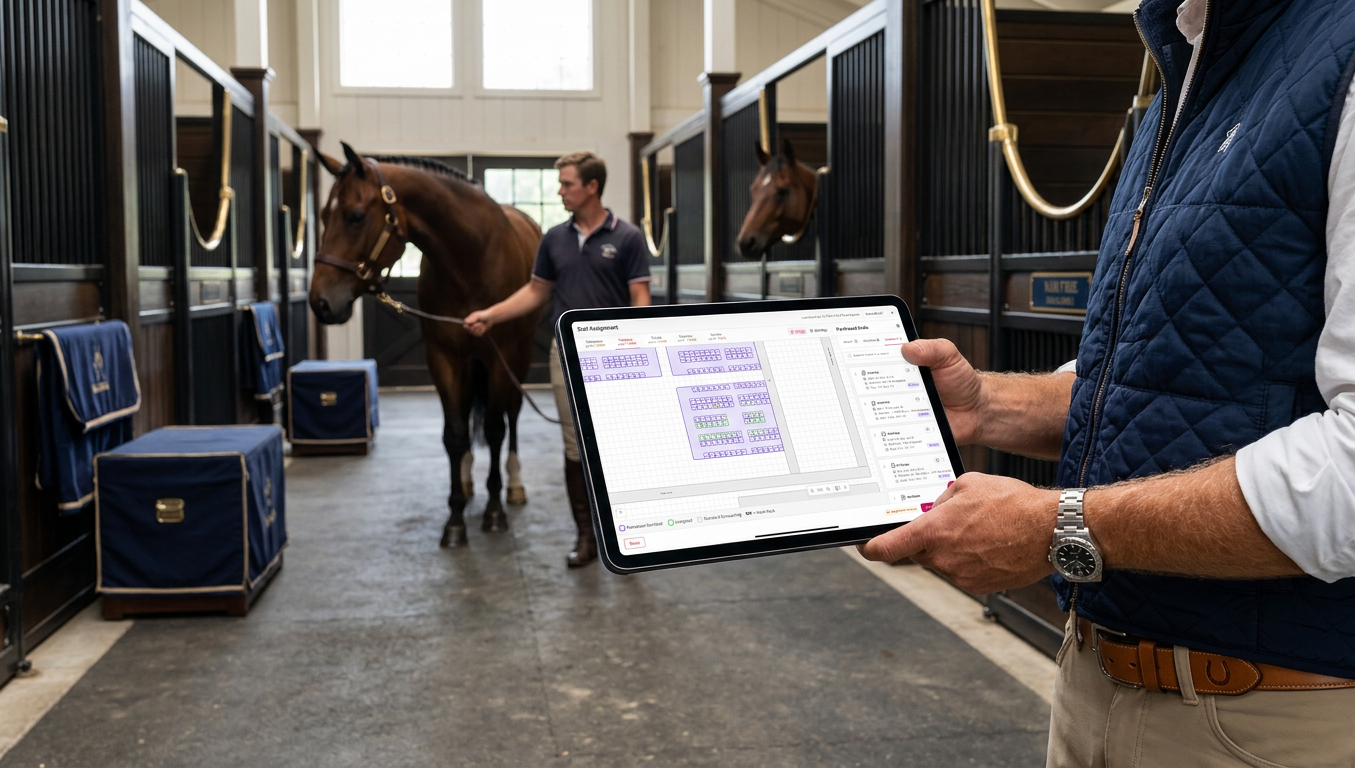
Moving away from the physical "barn board" in the show office is the first step toward modernization. A digital stall map provides a single source of truth for your stabling manager, the show office, and the exhibitors.
Real-Time Inventory Control
When a trainer adds a horse or scratches a tack stall, a digital system updates the map instantly. This prevents the nightmare scenario of a trailer pulling in at midnight only to find their assigned stalls are already occupied by another barn. As we noted in our guide on Optimizing Horse Show Arrival Logistics, clear communication before the horse ever leaves the farm is essential for a smooth start.
Strategic Placement for Traffic Flow
Grouping large trainer blocks together is not just a courtesy - it is a logistics strategy. By keeping high-traffic barns near the warm-up rings or wash racks, you reduce congestion in the main aisles. You can use digital tools to visualize these flows, ensuring that your showground layout remains safe and accessible for both horses and motorized carts.
What Are the Best Pricing Strategies for Stabling?
Profitability hinges on your ability to price stalls accurately against your overhead. If you are renting temporary tents, your per-stall cost is significantly higher than a facility with permanent barns.
- Tiered Pricing: Consider offering "Premier" stabling for stalls closest to the rings and "Standard" for those further away.
- Tack Stall Discounts: Some shows offer a slight discount for tack stalls to encourage trainers to book larger blocks, which simplifies the layout.
- Strict Deadlines: Implement a non-refundable deposit policy. As covered in our lesson on stabling deadlines, having a firm cutoff date allows you to cancel unneeded temporary rentals before you are locked into the contract.

Managing the Feed and Bedding Connection
Stall management is inextricably linked to your feed and bedding logistics. When exhibitors can pre-order shavings through their online entry, the stabling manager can ensure the stalls are bedded before the horse arrives.
This "pre-bedding" service is a dual win. It provides a better experience for the rider who has just spent six hours on the road, and it allows your staff to work during daylight hours rather than rushing to deliver bags in the dark on move-in night. Automated billing for these supplies ensures that no bag of shavings goes unpaid, a common leak in show finances.
How to Handle Last-Minute Stabling Changes?
The only constant in horse shows is change. A horse gets a stone bruise, a trainer adds a client, or a weather event delays travel. A modern management platform allows you to drag and drop assignments on a visual map, instantly pushing those updates to the Show Hub so trainers can see their new locations on their mobile devices.
By centralizing these changes, you eliminate the need for runners to go out and re-tag stalls manually. This efficiency allows your staff and volunteers to focus on safety and hospitality rather than administrative busywork.
Finalizing the Stall Office Close-Out
At the end of the show, reconciling stall fees is often the most tedious part of the office's job. Using an integrated system means that stall fees, shavings, and even late fees are already tied to the trainer's or owner's account. This simplifies the Sunday office rush and ensures your final financial reporting is accurate down to the penny.
Optimizing your stall management is not just a way to keep things organized - it is a fundamental shift toward a more professional, profitable, and exhibitor-friendly event. Whether you are running a local schooling show or a multi-week rated circuit, the barn is the heart of your operation. Treat it with the strategic focus it deserves.