 Pegasus
TL;DR
- Stabling is often the highest overhead cost but offers the greatest margin for profit.
- Digital stall maps reduce administrative errors and manual data entry by up to 80 percent.
- Tiered pricing and early-bird deadlines stabilize cash flow during the pre-show planning phase.
Effective horse show stall management is a cornerstone of event profitability and exhibitor satisfaction. By implementing digital stall maps, clear biosecurity protocols, and strategic pricing tiers, show managers can maximize facility usage while minimizing administrative labor. Transitioning from paper charts to integrated software allows for real-time tracking of tack stalls versus horse stalls, ensuring that every square foot of the barn generates revenue. This data-driven approach not only improves the trainer experience but also provides the financial buffer necessary to scale a regional show series.
Why is Stall Management Critical to Your Show's Success?
For many organizers, the stabling department is where the show either makes money or loses it. Unlike class fees, which fluctuate based on scratches and adds, stall fees are typically fixed revenue once reserved. However, if you are renting temporary stalls, your margins depend entirely on high occupancy rates. In our experience working with regional venues, an empty stall is more than just a missed fee-it is a sunk cost for the labor and haul-in fees you already committed to the facility.
Managing these logistics manually frequently leads to "the trainer squeeze." This is a situation where a trainer brings 15 horses but only reserved 12 stalls, or where grooming stalls are placed so far from the competition stalls that it disrupts the barn's workflow. Digital tools help eliminate these friction points by allowing trainers to visualize their blocks before they even arrive on the grounds.
How Can You Improve Stall Revenue and Occupancy?
To maximize the financial return of your stabling, you must look at your barn as more than just a place to park horses. It is a premium service. Here are three ways to optimize your revenue stream:
1. Implement Tiered Pricing
Not all stalls are created equal. If your facility has permanent barns with mats and fans, as well as temporary tent stalls, your pricing should reflect that difference. We have seen shows successfully implement premium "Front Row" stabling or "Circuit Stalls" for riders who commit to a multi-week series. This strategy is discussed further in our guide on how to build a recurring schooling show series.
2. Strict Deadlines and Non-Refundable Deposits
One of the biggest risks to a show budget is the last-minute pull-out. According to the Course: How to Run a Horse Show, setting firm stabling deadlines (Lesson 50) is essential for resource forecasting. Use online entries and rider payments to collect deposits early so you can finalize your temporary stall orders with vendors well in advance.
3. Monetize the Details
Don't leave money on the table when it comes to bedding and hay. By integrating feed and bedding orders directly into your stall reservation system, you can ensure that stalls are pre-bedded upon arrival. This adds value for the trainer and creates a seamless revenue stream for the show office.
What are the Benefits of Moving to Digital Stall Maps?
The days of using a whiteboard or a physical binder to manage 200 stalls are over. Digital stall maps and stabling offer several advantages that directly impact your bottom line and staff sanity.
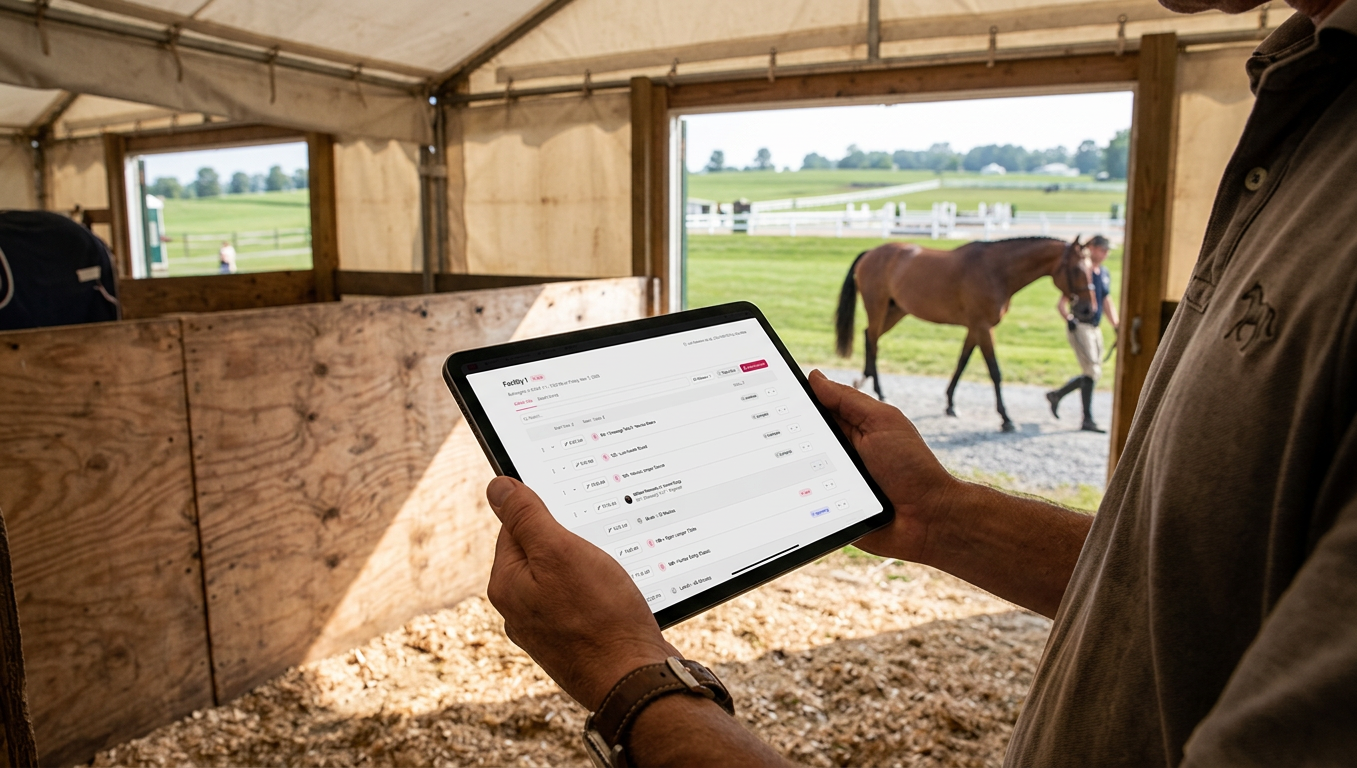
- Real-time Updates: When a trainer adds a horse on Wednesday night, the stabling manager sees it instantly on their tablet. No more frantic radio calls to the gate.
- Biosecurity Compliance: In the event of a health concern (as outlined in Lesson 5 of the Show Management Course), a digital map allows you to instantly track which horses were in proximity to each other. You can search by trainer, horse name, or Coggins expiration date.
- Sponsorship Visibility: Many shows sell "Barn Sponsors." A digital platform allows you to place sponsor logos directly on the digital map that exhibitors use to find their assignments, adding another layer of value to your sponsorship packages.
Training Your Team for Move-In Day
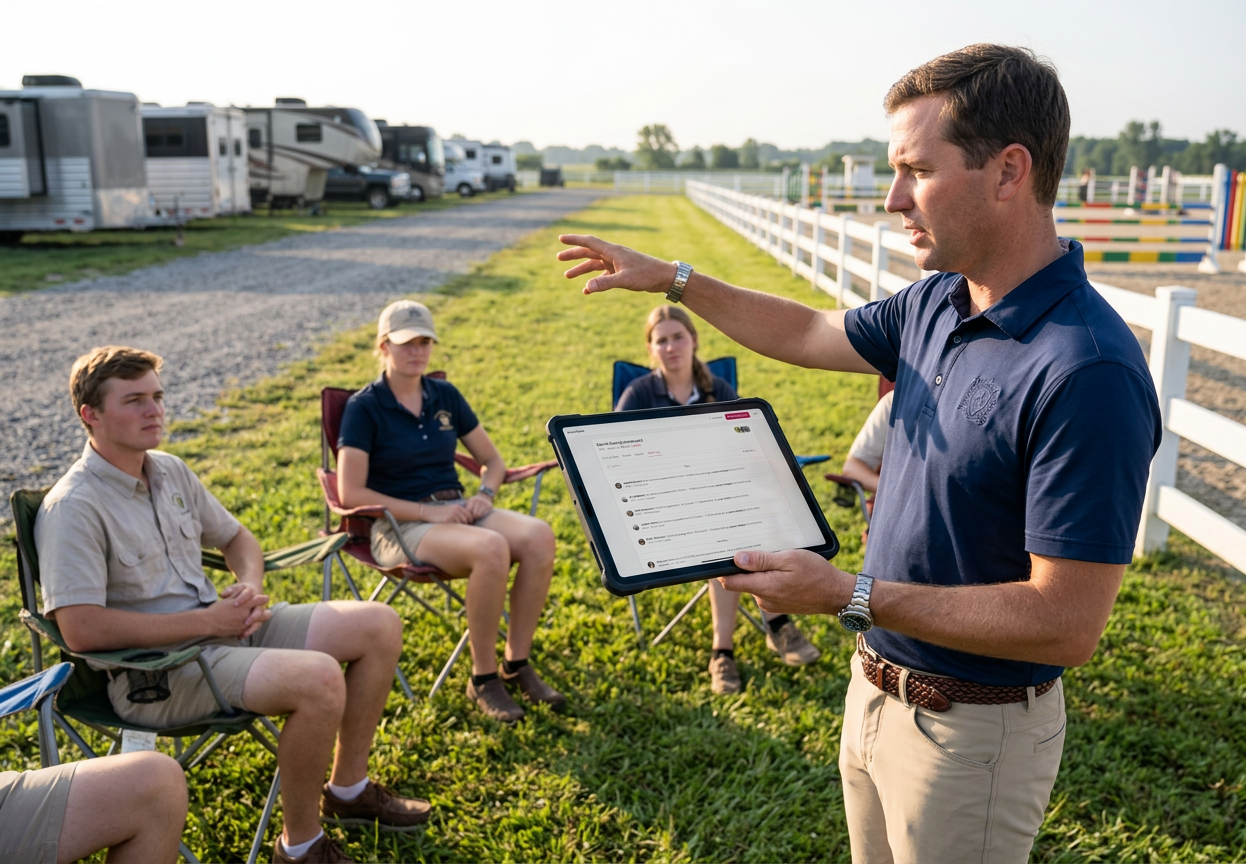
Your stabling manager is the first person a trainer interacts with when they pull onto the grounds. This role requires a blend of diplomacy and logistical precision. According to Lesson 25 of our management curriculum, the stabling manager should handle everything from water access planning to stall assignments.
We recommend a pre-show walkthrough to check for safety issues-loose boards, protruding nails, or drainage problems in the wash racks. A clean, safe barn area is the number one driver of exhibitor retention. If a trainer knows their horses will be safe and comfortable, they are much more likely to return for your next event.
Conclusion
Stall management is the heartbeat of a multi-day horse show. By treating your barn area as a strategic asset rather than a logistical chore, you can improve your margins and provide a better experience for trainers and riders alike. Whether you are running a local schooling show or a large regional event, the transition to digital tools is the single most effective way to protect your time and your revenue.
Ready to see how digital mapping can simplify your next event? Explore our full Pegasus feature overview to see our stabling tools in action.