 Pegasus
TL;DR
- Online scoring eliminates physical paper trails and reduces office congestion.
- Real-time updates keep riders informed, reducing stress during warm-ups.
- Digital integration improves transparency and allows families to follow along from anywhere.
Online scoring and real-time horse show scoring systems have transformed equestrian events by replacing paper-based tracking with instant digital updates. For organizers, it streamlines office tasks and helps manage ring timing; for riders and spectators, it provides immediate feedback and clear schedules. Using mobile-friendly platforms ensures that everyone from the judges to the parents in the bleachers stays synchronized, creating a more professional and efficient show day.
The Organizer: From Chaos to Control
For a show manager, the traditional paper-based system often feels like a race against time that you are destined to lose. Imagine the old way: a runner takes a sheet from the judge, walks it to the office, a secretary manually types the scores into a desktop program, and then someone pins a printed result sheet to a corkboard. It is a slow, error-prone cycle that keeps the office packed with anxious riders asking, "Has the score been posted yet?"
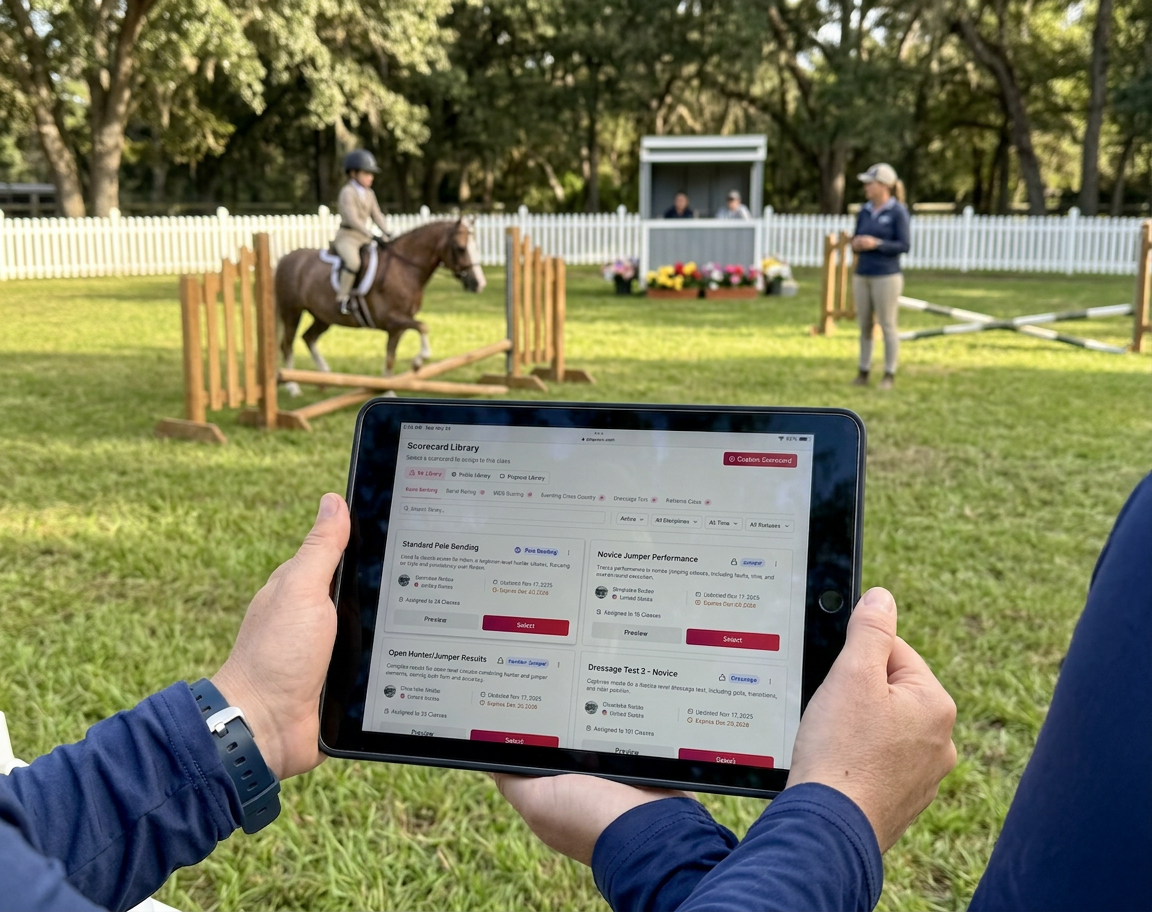
In our experience helping shows transition to digital tools, we have seen that Cloud vs. Desktop Horse Show Software makes a massive difference here. When the judge or scribe enters a mark on a tablet, it is live. There is no middleman. This shifts the organizer's role from data entry clerk to event curator. Instead of hunting down lost scorecards, you are monitoring live scoring and results to ensure the show stays on schedule.
We have seen organizers save up to three hours of office work per show day simply by removing the need to transcribe handwritten notes. This digital backbone also makes reports and post-show analytics much easier to generate, as the data is already captured in the cloud.
Why is Real-Time Horse Show Scoring Better for Riders?
The life of a rider on show day is a delicate balance of timing. You need to know exactly when to start your warm-up so your horse is peaking just as you enter the ring. Without real-time updates, riders often find themselves standing at the gate for forty-five minutes because the ring is running behind, or worse, rushing a warm-up because a class went faster than expected.
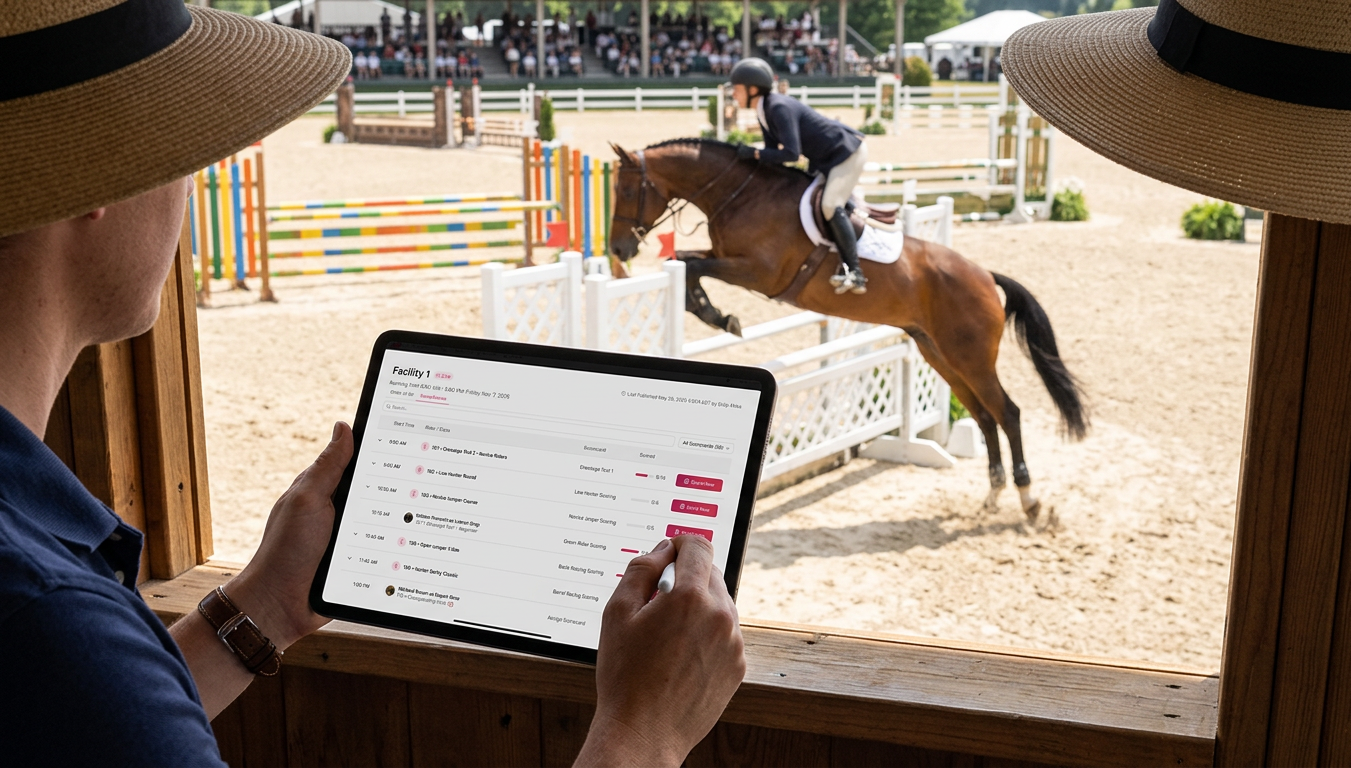
With online scoring, a rider can check their phone from the grooming stall and see exactly which horse is in the ring. They can see the scores of the riders ahead of them, which helps them understand how the judge is calling the class. This transparency builds trust. When you can see the breakdown of your marks moments after exiting the arena, the feedback is fresh and actionable.
Can Digital Tools Reduce Gate Stress?
Yes, absolutely. Most gate stress comes from a lack of information. When class scheduling and ring management tools are linked to live scoring, the "order of go" becomes a living document. Riders can see scratches and adds in real-time. This eliminates the need for the announcer to constantly shout for "Entry 402" who is actually still at the trailer because they did not know the class moved up.
The Spectator Experience: Following the Action
Perhaps the biggest winners in the shift to online scoring are the people in the stands - or the people back home. For a parent or owner, sitting through an eight-hour show day can be exhausting if they do not know what is happening in the ring.
Real-time horse show scoring turns a passive viewing experience into an engaging one. Spectators can follow the leaderboard on their phones, making it easy to understand the stakes of the final round. If a show is using the Show Hub, people can even discuss the rounds in dedicated show rooms, creating a sense of community that extends beyond the arena fence.
For family members who could not make the trip, digital results are a lifeline. They can see the scores as they happen, feeling connected to the rider's success in real-time. This level of engagement is what builds a loyal following for a recurring show series.
How Does Online Scoring Change the Judge's Workflow?
There is a common misconception that digital tools slow judges down. In reality, scribing on a tablet is often faster than writing on paper. Digital layouts are optimized for speed, using toggles and quick-tap buttons for common faults or movements. For more complex disciplines, our guide on Dressage Scribing 101 highlights how technology supports the precision required for higher-level scoring.
When a judge finishes a class, they do not have to wait for a runner. They hit "submit," and the winners are instantly calculated. This allows the announcer to call the results immediately, the ribbons to be handed out while the riders are still in the ring, and the next class to start without delay.
Transitioning Your Show to a Digital Model
Moving to real-time scoring might feel like a big leap, but the infrastructure needed is simpler than you think. Most modern facilities have enough cellular signal or Wi-Fi to handle the small data packets required for scoring.
According to the Course: How to Run a Horse Show, operational efficiency is the number one predictor of exhibitor retention. When riders feel the show is organized and the scoring is transparent, they are much more likely to return for your next event.
If you are worried about the cost, many shows find that the reduction in staffing needs (runners and data entry clerks) quickly offsets the price of the software. You can view the Pegasus pricing to see how our platform fits into your show budget.
At the end of the day, online scoring is not just about the numbers. It is about creating a day that feels professional, relaxed, and focused on the sport rather than the paperwork. Whether you are managing a small schooling show or a large regional event, the shift to real-time data is the single most effective way to improve the day for everyone involved.