 Pegasus
TL;DR
- Manual payment processing leads to an average revenue leakage of 5-10% through no-shows and bounced cheques.
- Automated collections ensure funds are secured at the point of entry, providing immediate cash flow.
- Modern tools integrate stabling, scratch fees, and EA memberships into a single, friction-free checkout.
Horse show entry fee collection automation allows organisers to secure revenue instantly by requiring payment at the time of online entry. By moving away from paper cheques and day-of-show cash payments, equestrian events can eliminate the risk of no-shows and reduce administrative labour by up to 20 hours per show week. Modern platforms like Pegasus provide a seamless, secure checkout experience that handles everything from Equestrian Australia (EA) levies to custom stabling costs, ensuring your show remains profitable before the first horse ever enters the ring.
Why Manual Payments are Costing Your Show Money
If you are still operating on a system of "cheques at the gate" or "pay at the show office," you are likely losing money without realising it. In our experience working with regional organisers across Australia, we have seen that manual systems create a significant layer of financial risk. When a rider enters a show but does not show up, a manual system leaves you with an empty slot in the schedule and a zero on the balance sheet.
Financial leakage occurs in three primary areas: no-shows, bounced cheques, and human error during the reconciliation process. Even a small local hacking day or schooling show can lose hundreds of dollars in a single weekend when riders scratch last minute without a pre-paid deposit. By implementing horse show entry fee collection automation, you shift the financial commitment to the moment the rider decides to compete. This not only protects your bottom line but also provides the liquid capital needed to pay for judges, EMTs, and facility hire fees at venues like SIEC or Boneo before the event begins.
How does automation prevent no-shows and late scratches?
The psychology of an entry changes when a credit card is involved. When a rider pays their nomination fee or full entry up front, they are significantly more likely to follow through. If they do need to scratch, an automated system can apply your specific refund policy—whether that is a 50% refund before a certain date or a total forfeiture of fees after the closing date—without your show secretary having to have a difficult conversation at the desk.
We have seen organisers use Pegasus pricing structures to incentivise early entries while penalising late ones automatically. The software tracks the date of the entry and applies the correct fee tier without manual intervention. This ensures that the published price is the price paid, removing the "friend of the manager" discounts that can quietly erode a show’s profitability. For a deeper look at the operational side of these finances, you can reference the Course: How to Run a Horse Show, specifically Lessons 35-40 on budgeting and cost control.
Integrating Stabling and Add-Ons
Automation is not just about the class fees. True financial efficiency comes from capturing every ancillary cost. This includes:
- Stall Reservations: Securing stall maps and stabling revenue up front to cover the cost of temporary yard or stable rentals.
- Bedding and Feed: Billing for pre-ordered supplies so your grounds crew knows exactly what to deliver to the barn.
- Governing Body Fees: Automatically calculating and collecting Equestrian Australia (EA), Pony Club Australia (PCA), or state branch (EV, ENSW, etc.) levies and admin fees.
- Office Fees: Ensuring every horse on the grounds contributes to the administrative overhead.
Is your show office buried in paperwork?
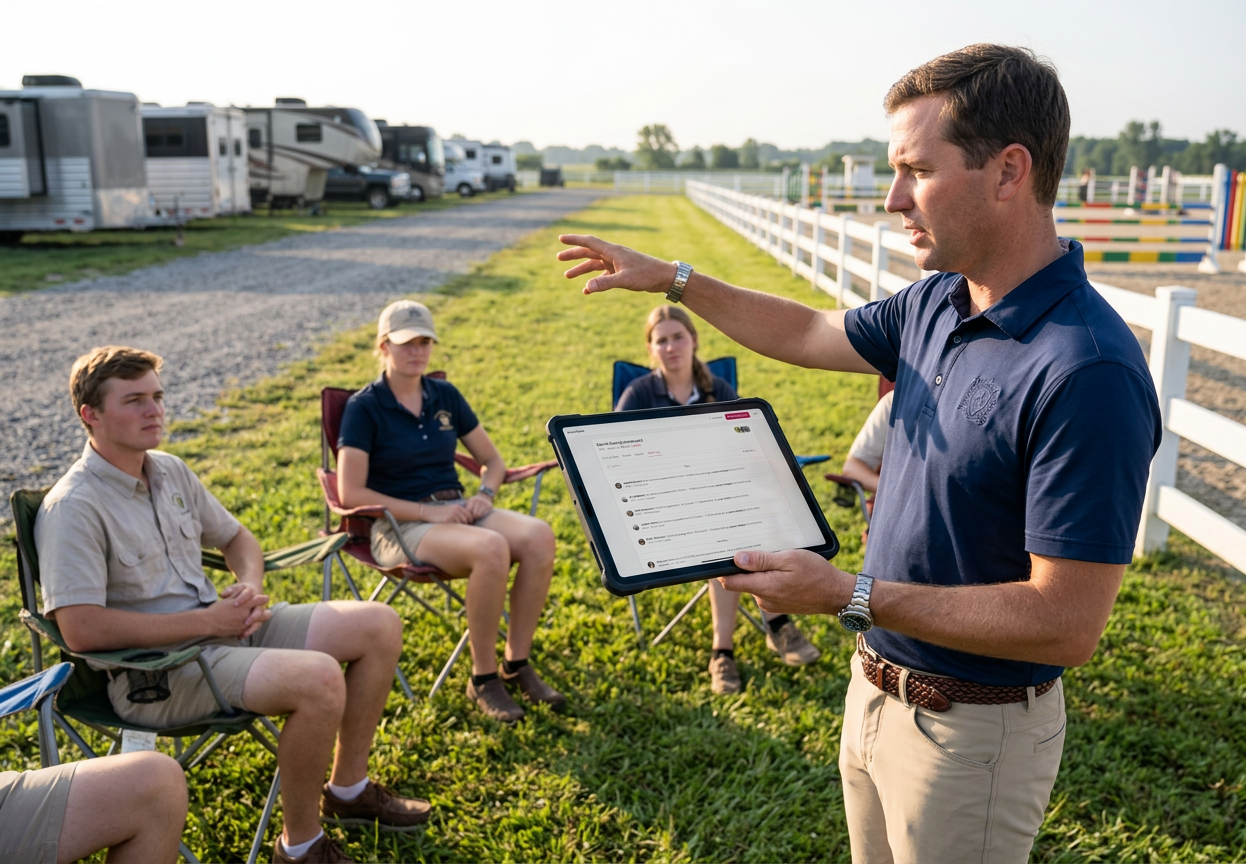
A significant portion of a show secretary's time is spent chasing down missing signatures and unverified payments. When you move to an automated system, the office becomes a place for hospitality rather than a collection agency. In our post on how to run your first schooling show, we highlighted that administrative burnout is one of the leading reasons organisers stop running events.
With online entries and rider payments, the system validates the data as it comes in. If a credit card fails, the entry is flagged before it ever hits your starting list. This means your class scheduling and ring management tools are only working with confirmed, paid exhibitors. This data integrity flows through the entire event, all the way to post-show analytics.
The Impact of Real-Time Financial Reporting
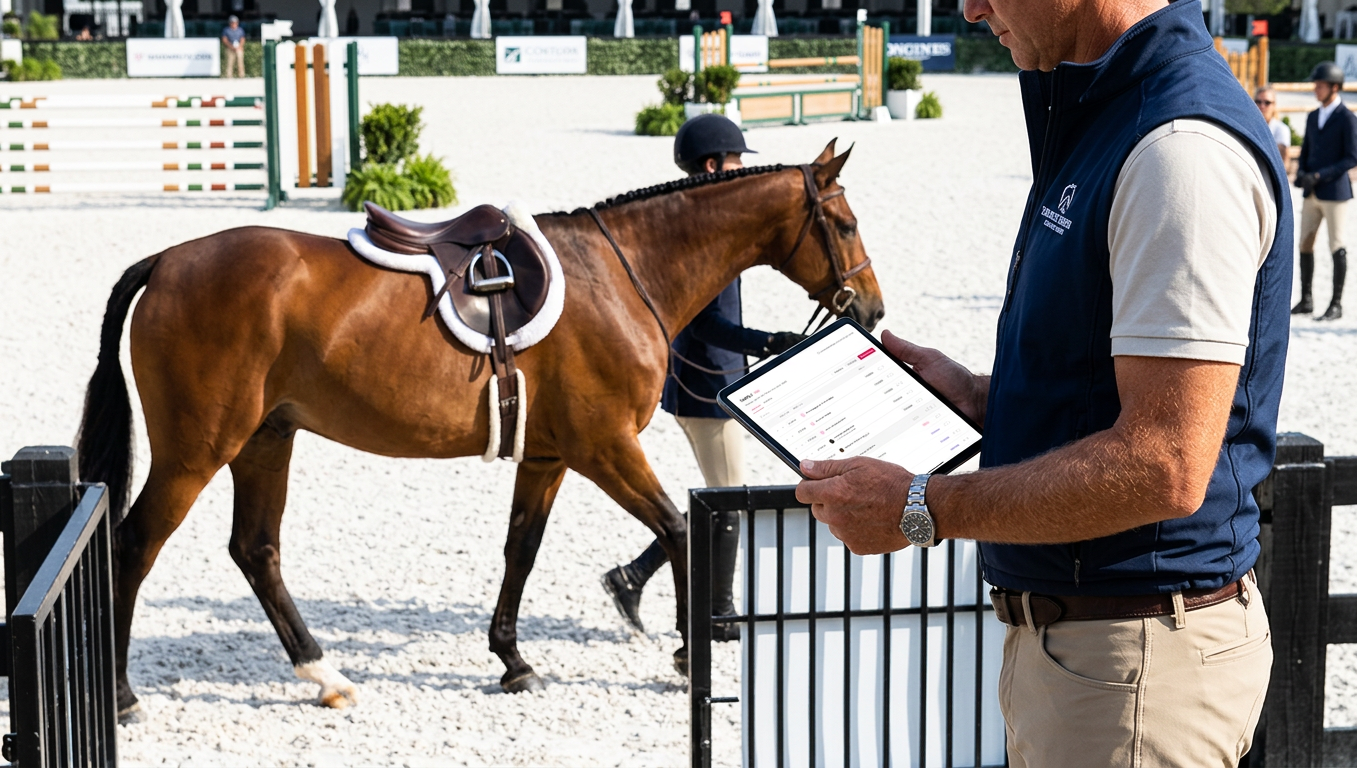
One of the most powerful benefits of automation is the ability to see your show’s financial health in real-time. Instead of waiting two weeks after the show to reconcile a box of cheques, you can see your total revenue in A$, pending balances, and processing fees at a glance.
This level of transparency is essential for regional shows in Australia that operate on thin margins. When you can see that your stabling revenue has reached its break-even point three weeks before the show, you can make informed decisions about marketing or hiring extra judges.
Protecting Rider Data and Security
Security is a major concern for trainers and riders alike. Handing a paper cheque containing bank account details to an unknown volunteer is a security risk. Automated systems use encrypted payment gateways—the same technology used by major e-commerce retailers—to keep financial data safe. This builds trust with your exhibitors and positions your club as a professional, modern organisation.
Closing the Loop: Post-Show Payouts
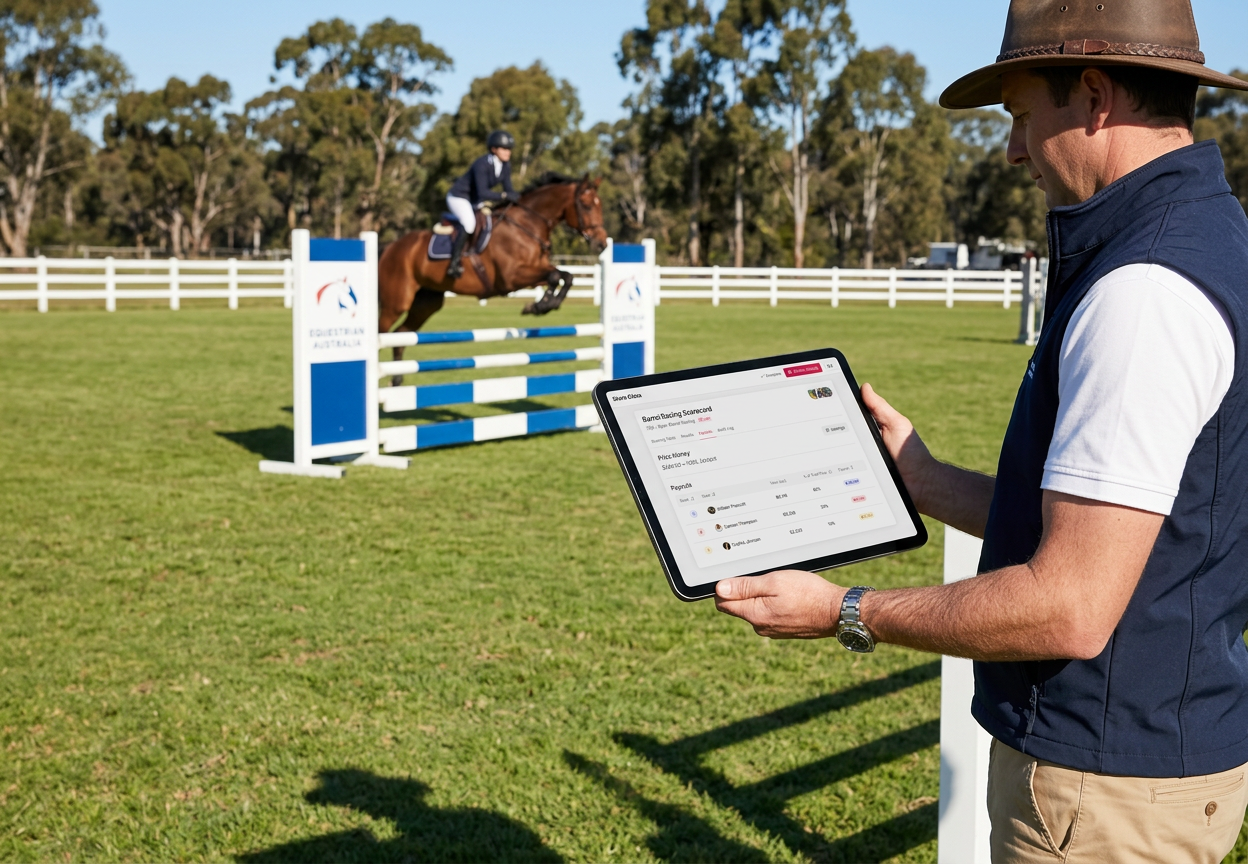
If your show offers prize money, automation simplifies the most stressful part of the event: the payout. By having rider and owner bank details already in the system, you can process prize money via direct deposit or platform credits. This eliminates the need to mail out physical cheques and significantly reduces the labour of prize money administration (Lesson 31).
In the end, automation is about more than just convenience. It is about the long-term sustainability of your event within the Australian equestrian community. By securing your revenue early and reducing the overhead required to manage it, you can focus on what really matters—creating a great experience for the horse and rider.