 Pegasus
TL;DR
- Transition to fully digital entry systems to eliminate manual data entry errors.
- Centralize all show documents (Coggins, waivers, memberships) in a single digital folder.
- Use real-time reporting to manage adds, scratches, and financial balances throughout the day.
- Focus on clear signage and digital check-ins to reduce physical office congestion.
Streamlining horse show office operations is the most effective way to improve the exhibitor experience while reducing the administrative burden on your staff. By replacing paper-heavy workflows with digital entry management, automated membership verification, and real-time financial tracking, show managers can eliminate the typical Sunday office rush and ensure data accuracy. Modern tools allow for the seamless handling of adds, scratches, and payments, transforming the show office from a bottleneck into a high-efficiency hub that supports the overall flow of the event.
The Digital Shift in Show Office Management
For decades, the horse show office was a room filled with filing cabinets, three-ring binders, and stacks of paper entries that were often difficult to read. In our recent show seasons at Pegasus, we have seen a massive shift toward digital-first operations. Organizers are realizing that every minute spent deciphering handwriting or manually typing an address into a database is a minute stolen from meaningful event management.
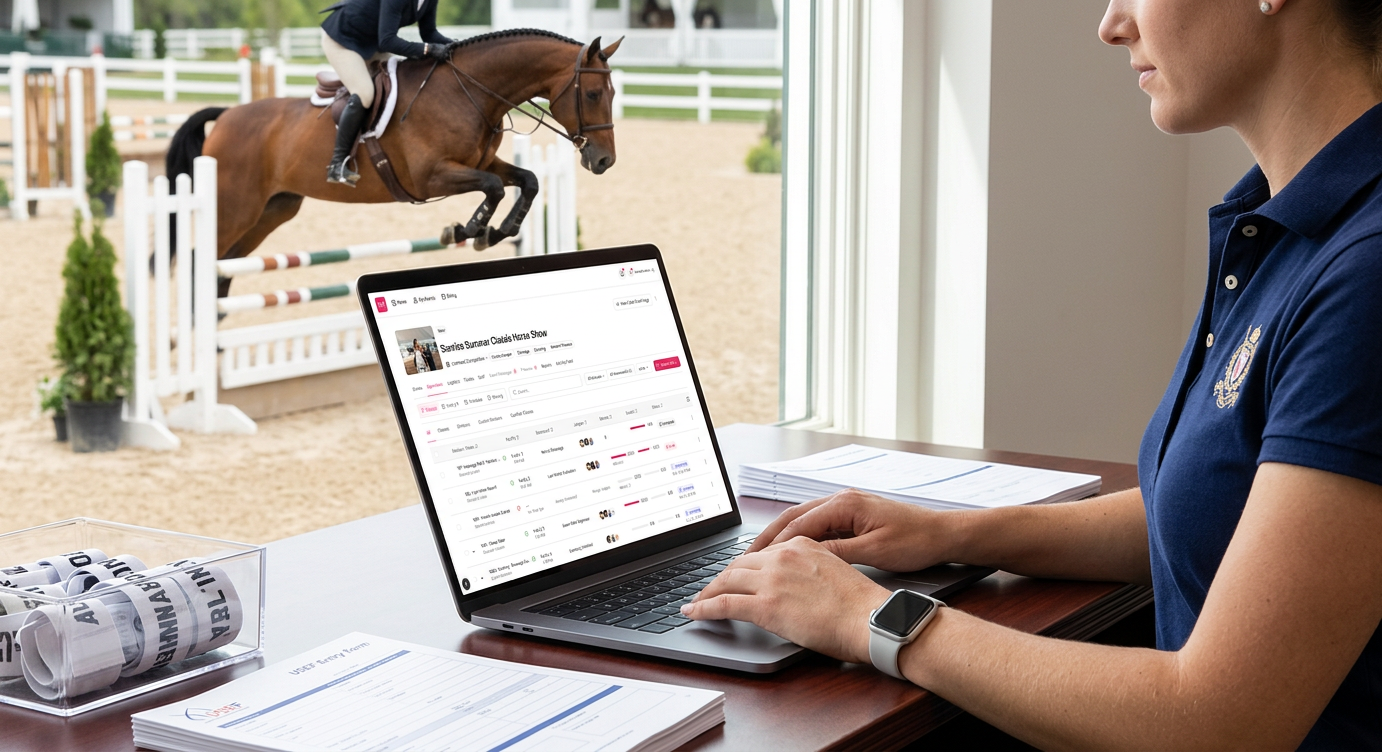
Streamlining horse show office operations starts with your entry process. When you require online entries & rider payments, the data flows directly into your management system. This eliminates the "double entry" problem where a secretary must re-type information from a paper form into the computer. Digital entries also ensure that mandatory fields, like trainer names or horse registration numbers for organizations like USEF or AQHA, are completed before the exhibitor even arrives at the grounds.
Why does the show office become a bottleneck?
The office usually becomes a source of frustration due to three main factors: incomplete documentation, manual financial reconciliations, and the "Sunday rush." When riders arrive at the window to pick up numbers, they often discover they are missing a Coggins report or a signed waiver. This stops the line and creates a backlog.
By using a digital Show Hub, you can allow riders to upload these documents weeks in advance. Your office staff can then verify them during quiet periods leading up to the show, rather than under pressure at 7:00 AM on Friday morning. As we discussed in our guide on streamlining horse show arrival logistics, a pre-verified rider is a fast-moving rider.
Optimizing the Workflow for Staff and Volunteers
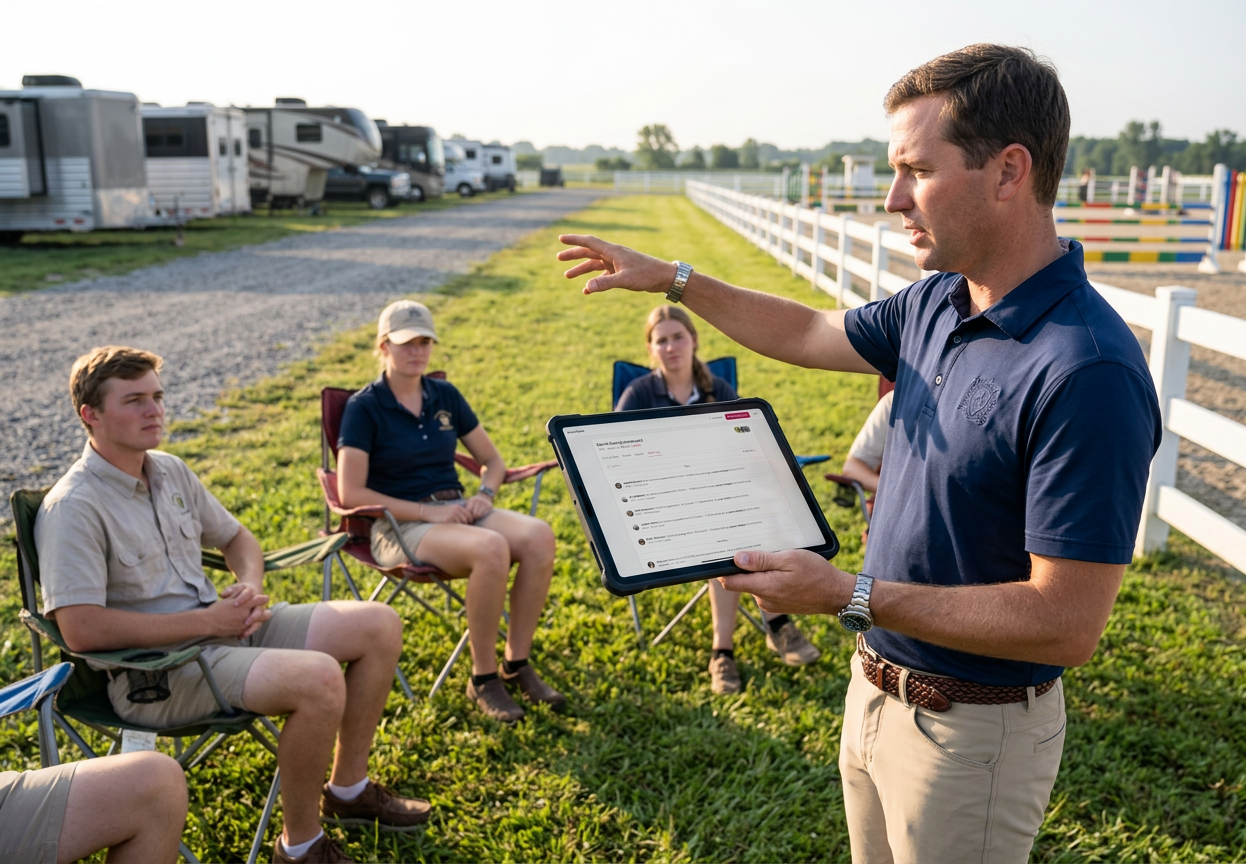
Efficiency is not just about the software; it is about how your people interact with it. A well-organized office should have clear roles. In larger circuits, we recommend separating the "Public Facing" staff from the "Data Entry" staff. The people at the front window should focus on customer service and quick inquiries, while someone in the back handles the complex task of mastering the horse show close-out.
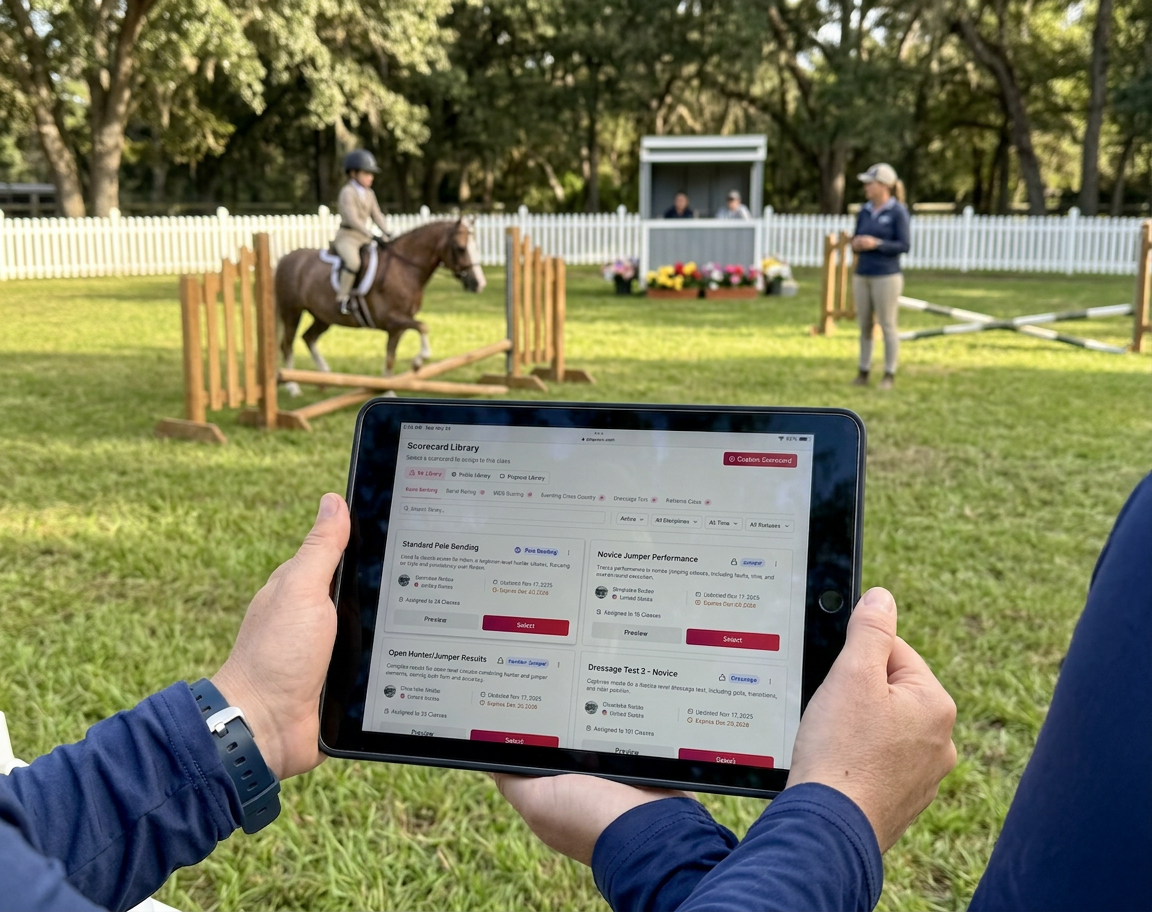
- Digital Add/Scratch Forms: Move away from paper slips at the back gate. When an in-gate person updates a class list on an iPad, it should reflect immediately in the office.
- Automated Membership Checks: Use systems that integrate directly with USEF or other governing bodies to verify memberships instantly.
- Centralized Communication: Use digital tools to notify trainers of schedule changes, rather than relying on them to visit the office for updates.
For more on how to structure your team, see our resource on horse show staff management and digital volunteer coordination.
How can technology reduce the Sunday office rush?
The "Sunday Rush" is a phenomenon where every exhibitor tries to close out their bill and pick up their ribbons at the exact same time. This is often the last impression a rider has of your show, and if they spend an hour standing in line, it can overshadow a weekend of great riding.
Streamlining horse show office operations to fix this involves two main strategies: automated billing and remote check-out. If your system allows riders to view their statements in real-time on their phones, they can catch errors early. Even better, providing a way for them to pay via the app means they never have to visit the office window at all. We have covered the financial benefits of this in our guide on eliminating the Sunday office rush.
Financial Accuracy and Real-Time Reporting
One of the biggest risks in a non-streamlined office is the loss of revenue through unrecorded adds or incorrect stall counts. When the office is disorganized, it is easy for a rider to slip into a class without a formal entry, or for a tack stall to go unbilled.
Using reports & post-show analytics throughout the event, rather than just at the end, allows you to audit your revenue daily. You can compare the stall maps & stabling against the billing records to ensure every occupied space is accounted for. This level of oversight is critical for maintaining the profitability of the event, as detailed in our profitability guide for stall management.
Practical Tips for Office Layout
- The Two-Window System: Dedicate one window for "Check-In/Packet Pickup" and another for "Financials/Ribbons."
- Self-Service Kiosks: Set up a tablet where riders can search for their own start times or results.
- Signage: Use large, clear signs to direct traffic. If riders know exactly where to go for a specific need, they won't crowd the main desk asking for directions.
Building a Sustainable Office Culture
Finally, streamlining horse show office operations is about creating a calm environment. A frantic office leads to mistakes, and mistakes lead to unhappy exhibitors. By implementing these digital workflows, you give your staff the tools they need to stay ahead of the curve.
When the office runs smoothly, the entire show feels more professional. You are no longer just managing a competition; you are providing a seamless service that encourages trainers and riders to return year after year. If you are looking for a deep dive into the operational side of these events, check out our primary resource, Course: How to Run a Horse Show, which covers everything from Lesson 1 management responsibilities to Lesson 46 registration systems.