 Pegasus
TL;DR
- Replace static paper schedules with cloud-based shift tracking for real-time adjustments.
- Automated notifications reduce ring delays by alerting gate stewards to adds and scratches instantly.
- Using digital tools for role assignments improves volunteer retention by 20-30 percent according to industry trends.
- Analyze post-show data to optimize personnel count and reduce unnecessary payroll expenses.
Modern equestrian events require precision timing, which is why Horse Show Staff Management and Digital Volunteer Coordination is now a critical focus for successful organizers in 2026. By utilizing cloud-based platforms, show managers can assign roles, track scribe shifts, and communicate gate changes to personnel via mobile devices instantly. This digital-first approach eliminates communication gaps that lead to ring delays, ensuring that every staff member and volunteer knows their exact position as the schedule evolves in real-time.
The Human Bottleneck in Event Operations
We have all been there: the jumper ring is running 20 minutes ahead of schedule, but the next gate steward is still on a lunch break because they are following a printed PDF from 8:00 AM. In our recent show seasons, we have seen that the most common cause of show delays isn't the riders or the horses-it is a breakdown in staff communication.
Effective Horse Show Staff Management and Digital Volunteer Coordination is about more than just filling slots on a spreadsheet. It is about creating a live ecosystem where your workforce can react to the fluid nature of a horse show. In a sample 3-day show, a manager might oversee 15-25 different staff roles. When you move your staffing plan to the cloud, you transition from a static plan to a dynamic operation.
Why manual staffing plans fail
Paper schedules and group texts often fail because they lack central version control. If a scribe needs to swap rings, a paper trail requires the secretary to physically find both parties. With digital coordination, a quick update in the dashboard reflects across all devices, ensuring the show office operations stay synchronized with the field staff.
How Can Digital Tools Optimize Show Day Roles?
Digital coordination allows you to categorize your workforce by skill set and availability. For example, a veteran scribe who understands dressage coefficients is a different asset than a high school student helping with rail duty for community service hours.
By using a centralized system, you can:
- Assign roles based on credentials: Ensure specialized staff like EMTs and course designers are tracked separately from general volunteers.
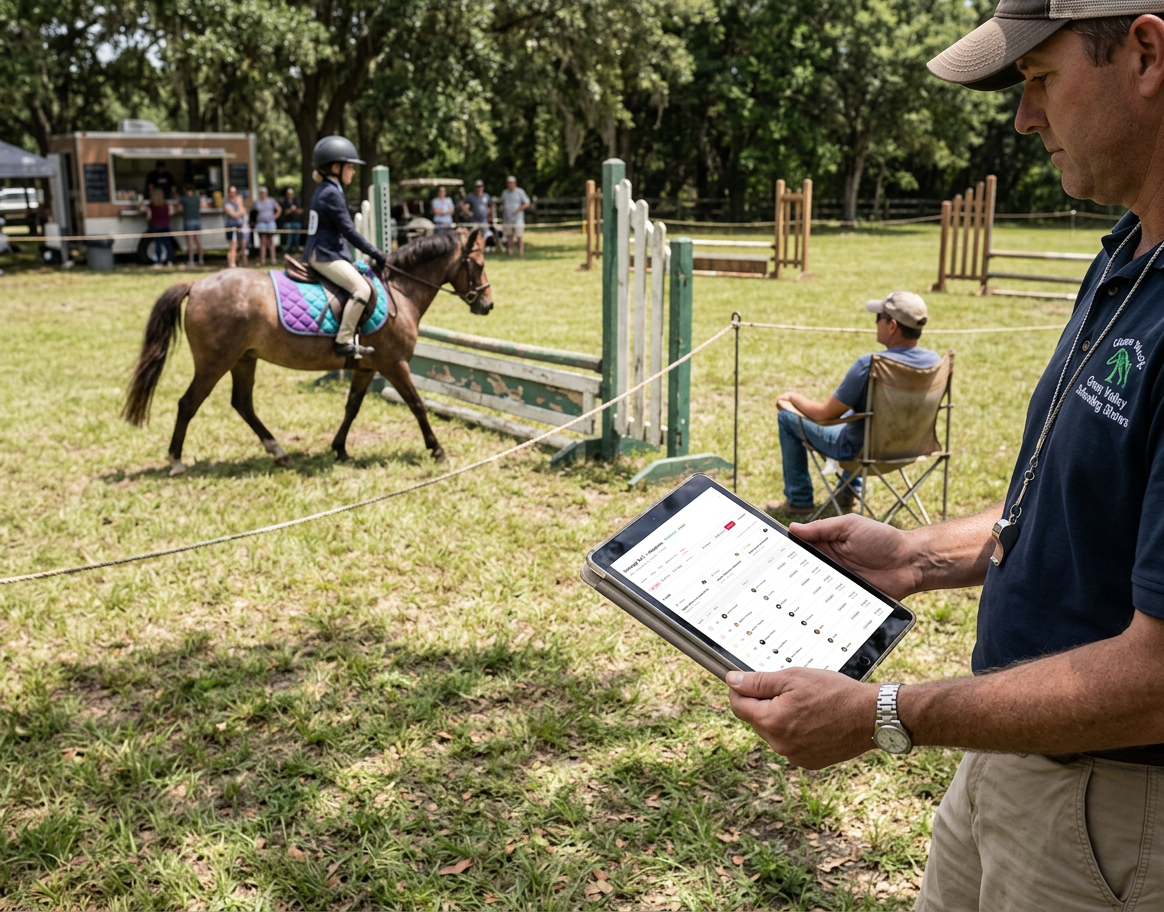
- Track shifts in real-time: Use check-in features to see who is on grounds 30 minutes before the first horse enters the ring.
- Bridge the gap between rings: If Ring 1 finishes its 25 hunter rounds early, you can instantly reassign those volunteers to Ring 3 to help with afternoon jump resets.
For a deeper look at managing the flow of the event itself, we covered this in Modern Horse Show Ring Management: Keeping Your Event on Schedule. Our data shows that efficient volunteer movement can shave 45 minutes off a standard competition day.
How Do You Communicate Schedule Changes Instantly?
One of the greatest challenges for any manager is the "ripple effect." A single class delay in the morning can shift the entire afternoon by 2 hours. Traditionally, this meant sending a runner to every ring to update the staff.
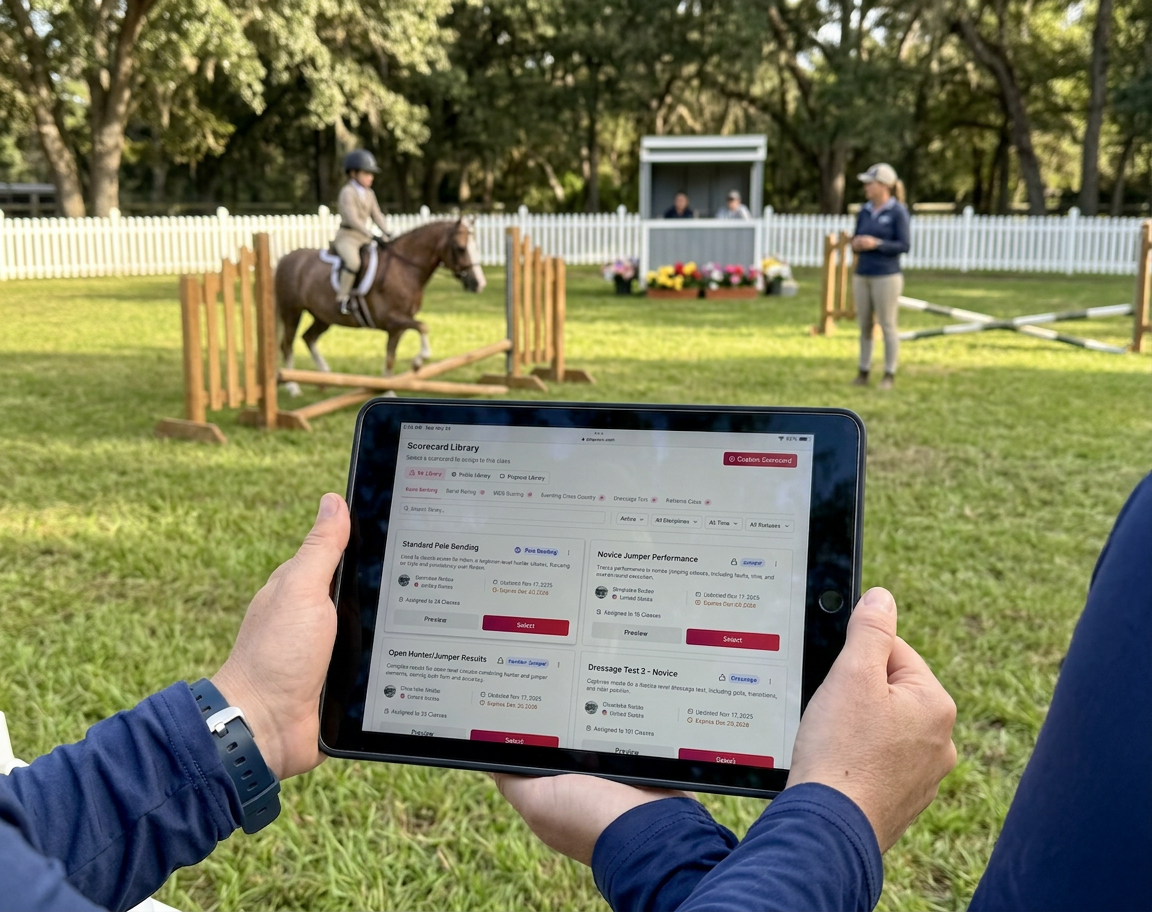
With modern class scheduling and ring management, changes are pushed to staff devices immediately. This is particularly vital for real-time horse show scoring, where the scribe and the announcer must be perfectly aligned on the order of go.
Instant notifications for gate staff
When a trainer adds a horse at the last minute or a rider scratches, the gate steward needs to know before the horse arrives (or doesn't). Digital tools allow the show secretary to push these status updates directly to the steward's tablet. This keeps the in-gate flowing and prevents "empty ring time," which can cost a show manager thousands in overtime fees for ring crews and lights if the show runs past sundown.
Supporting Your Staff to Reduce Turnover
According to the Pegasus Course: How to Run and Horse Show, staff and volunteer retention is one of the highest cost-saving measures an organizer can implement. Hiring and training new people every weekend is exhausting and expensive.
The volunteer experience matters
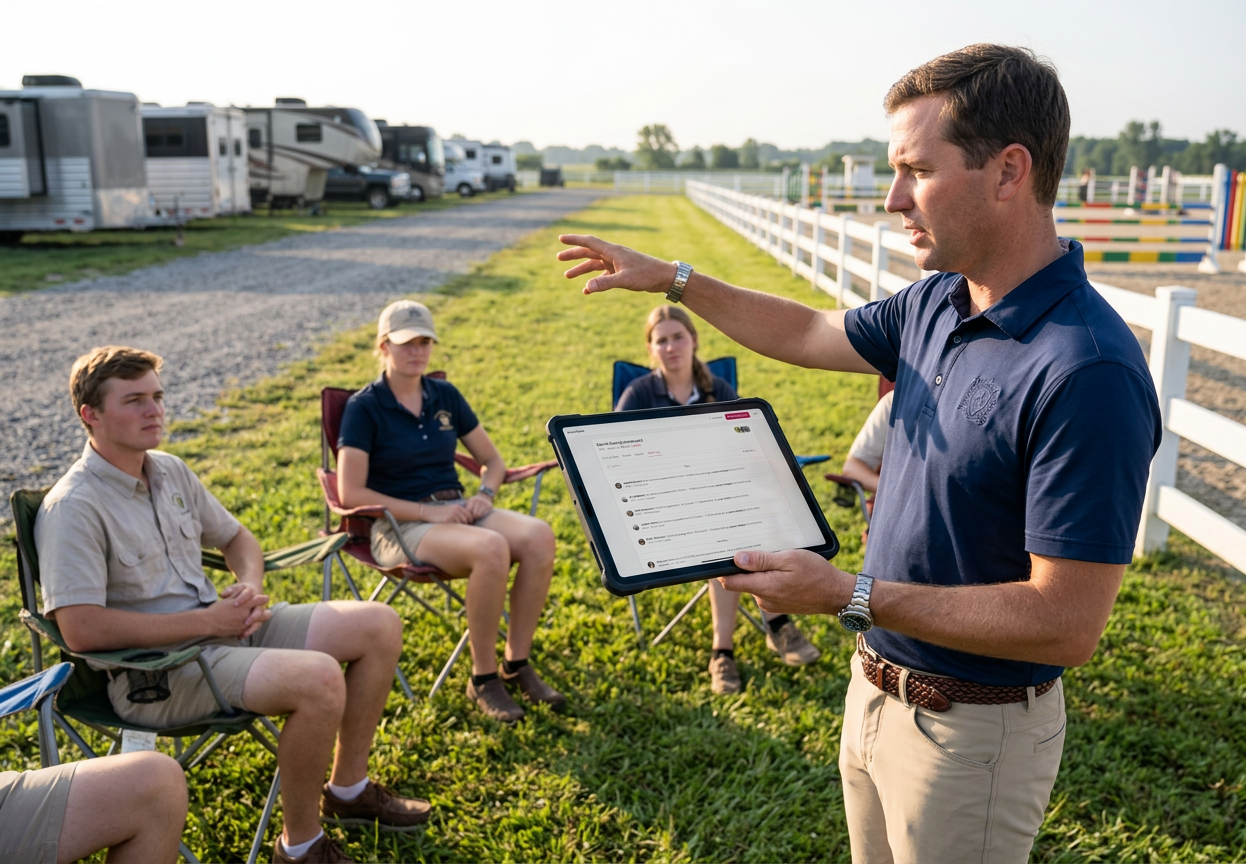
Volunteers want to feel useful and informed. There is nothing more frustrating for a volunteer than standing in the rain or sun without knowing when their relief is coming. A digital portal allows them to see their own schedule, know exactly who their supervisor is, and receive digital thanks or credits after the event.
We have seen organizers use Pegasus partner network rewards or schooling credits to incentivize their digital sign-ups. By making the process professional, you attract a higher caliber of help. In many cases, providing a clear digital schedule can improve volunteer satisfaction scores by over 40 percent.
Reporting and Post-Show Analytics
After the last ribbon is pinned, the work of Horse Show Staff Management and Digital Volunteer Coordination continues. You need to verify the following metrics:
- Ring Efficiency: Which rings maintained their designated 2-minute gap between riders?
- Personnel Loading: Did you have 10 people standing around at 8:00 AM but were short-handed during the 4:00 PM rush?
- Labor Costs: Which staff members worked the most hours for payroll or community service credit?
Using reports and post-show analytics allows you to audit your workforce efficiency. If you notice that Ring 2 always runs late regardless of the judge, but discovery shows the gate staff was under-manned, you can adjust your staffing levels for the next show in your series. We recommend reviewing these reports within 48 hours of show completion while the logistics are still fresh.
Final Thoughts on Digital Coordination
Transitioning to a digital system for staff management is not just about being tech-forward-it is about professionalizing the sport. When your staff is coordinated, the riders notice. The entries come in faster, the online entries and rider payments are handled more smoothly, and the entire atmosphere of the show improves. If you are still relying on a clipboard and a prayer, it is time to look at how cloud-based coordination can reclaim your time and sanity.