 Pegasus
TL;DR
- Stalls are the primary revenue driver and largest overhead cost for multi-day equine events.
- Digital stall maps eliminate paper-trail errors and prevent costly vacancies.
- Proper horse-to-tack stall ratios (often 3:1 or 4:1) can increase barn profitability by 15-20%.
Optimizing horse show stall management is one of the fastest ways for event organizers to improve their bottom line while reducing the logistical stress that often bogs down the show office. By utilizing real-time digital stall maps, setting clear reservation deadlines, and carefully tracking horse-to-tack stall ratios, managers can maximize their facility footprint, prevent vacancies, and provide a superior, professional experience for trainers and their clients.
Why Stall Management is the Central Pillar of Show Economics
If you have ever spent a Tuesday night before a show with a highlighter and a massive paper floor plan, you know that stabling is the most complex puzzle in horse show management. In our recent seasons at Pegasus, we have seen that stalls represent more than just a shelter - they are the financial foundation of the circuit. Whether you are running a USEF rated show or a local schooling circuit, every empty stall is a missed opportunity for revenue, and every overbooked barn is a public relations disaster.
Effective management starts with understanding that stalls are a finite resource. Unlike class entries, which can often be squeezed into a schedule, physical barn space has a hard cap. This is why optimizing horse show stall management is essential. It is the difference between a show that breaks even and one that generates enough profit to reinvest in better footing or higher prize money. We often refer to Lesson 5 of the Course: How to Run a Horse Show for managers looking to master these specific logistics.
How Can Digital Stall Maps Increase Your Revenue?
One of the biggest leaks in show revenue happens when trainers verbally reserve a block of stalls that never fully materialize. Without a digital system that links reservations to online entries and rider payments, you are left holding a bag of empty stalls that could have been sold to other exhibitors. We have seen shows lose thousands of dollars simply because "ghost" reservations prevented new entries from booking.
Digital tools allow you to:
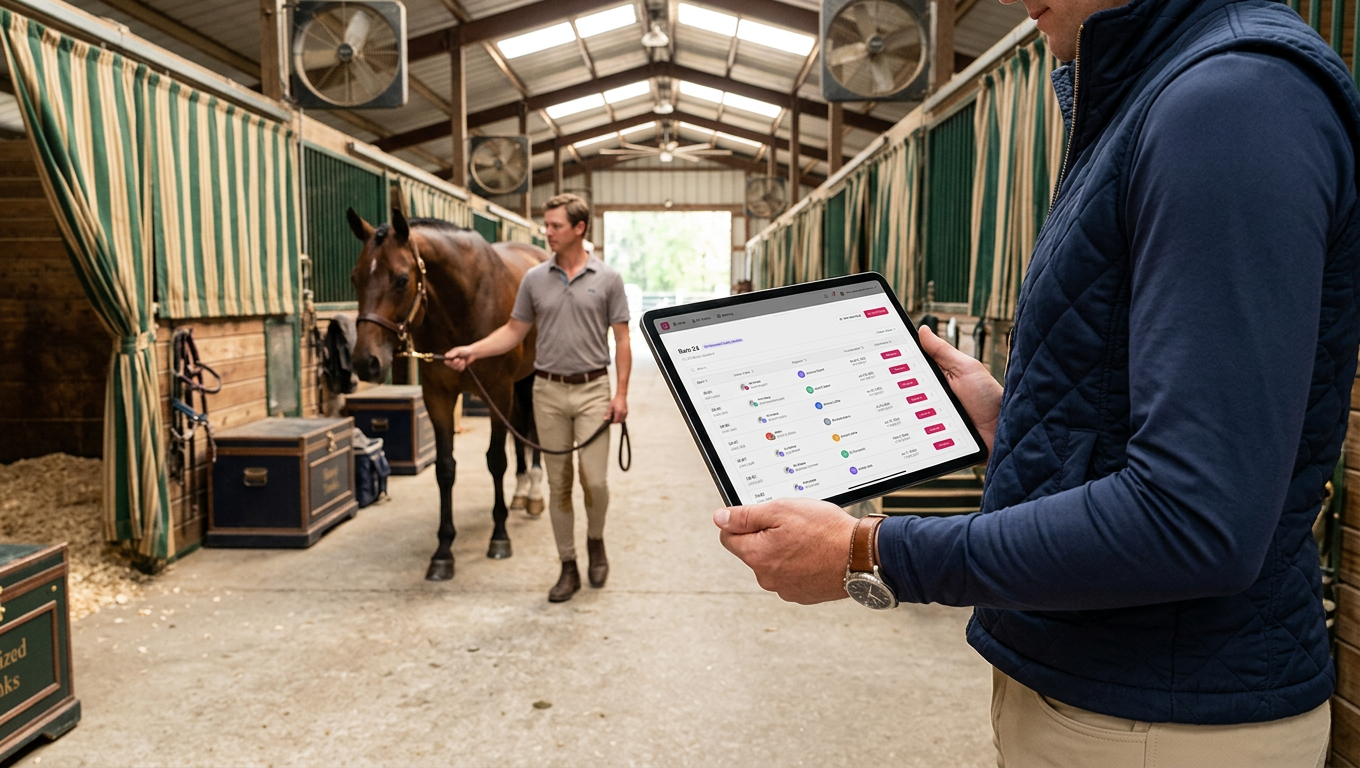
- Visualize the Barn Layout: See exactly which stalls are horse stalls versus tack stalls in real time.
- Link Payments to Reservations: Require a deposit or full payment at the time of booking to reduce last-minute cancellations.
- Automate Deadlines: Establish a firm cutoff point for stall changes. As we discussed in our guide on mastering the horse show prize list, clear policies prevent administrative headaches during the busiest week of the year.
When you use stall maps and stabling software, you can see the density of your barn occupancy. If Barn A is 60% full and Barn B is 50% full, a digital view allows you to consolidate competitors, potentially saving on night watch labor or electricity costs for lighting and fans in a largely empty building.
The Trainer Connection: Managing Large Blocks with Ease
Trainers are your primary customers when it comes to stabling. Most do not want to manage individual payments for 20 clients. They want to reserve a block and know that their horses will be grouped together with their tack rooms located at the end of the aisle.
We have found that the most successful organizers provide a self-service portal where trainers can manage their own "Trainer Splits." This reduces the burden on the show secretary. Instead of the office spending hours dividing bedding costs and stall fees across 10 different monthly statements, the software does it automatically. This level of service keeps trainers coming back season after season. We have covered this efficiency before in our post on optimizing horse show stall management.
Balancing Horse vs. Tack Stalls
A common mistake in horse show management is failing to monitor the ratio of horse stalls to tack stalls. While tack stalls are necessary for grooming and storage, they are often priced lower than horse stalls. If your horse-to-tack ratio is 1:1, you are likely leaving money on the table.
Many managers now implement a policy where one tack stall is allowed for every 3 or 4 horse stalls booked. Digital reports and post-show analytics can help you look at your historical data to see if you have been too generous with tack space at the expense of horse entries.
What are the Best Practices for Biosecurity and Stall Safety?
Profitability should never come at the expense of horse welfare. Modern stall management must include a digital record of which horse was in which stall. In the event of a health outbreak - like EHV-1 - having a digital log is vital for contact tracing. Use Show Hub rooms to communicate these health protocols to your exhibitors instantly.
- Disinfection Records: Use your digital map to mark stalls that have been stripped and disinfected between shows.
- Emergency Contact info: Pegasus allows you to link the horse's entry to their stall, so if a horse is found colicking at 2:00 AM, the night watch can instantly look up the trainer and owner contact info on an iPhone.
- Facility Maintenance: If a board is broken in Stall 12, a digital system allows the grounds crew to mark that stall as "Out of Order" so it is not accidentally assigned to a high-end jumper owner.
Improving the Exhibitor Experience on Arrival Day
Arrival day is the first impression a rider has of your event. If they arrive after a 6-hour haul to find that their stalls are not marked or their neighbor's tack has spilled into their aisle, the weekend is already off to a bad start.
By streamlining horse show arrival logistics, you can ensure that stall assignments are posted digitally. Riders can check their phone before they even unseal the trailer ramp to see exactly where they are headed. This reduces the line at the show office and gets horses off trailers and into hay nets faster.
Can You Forecast Future Stall Needs With Data?
Looking back at your end-of-show reports is the best way to plan for next year. If you find that you consistently sell out of temporary stalls but have vacancies in your permanent barns, it may be time to rethink your pricing tiers.
Perhaps the permanent stalls should carry a premium price, or maybe your early-bird deadline needs to be moved up to better inform your order of temporary tents. At Pegasus, we see organizers use these metrics to negotiate better rates with stall rental companies because they have concrete data on their needs 6 months in advance.
Managing horse show stalls is a high-stakes game of Tetris. But with the right digital tools and a focus on data-driven decisions, you can turn your barns into a predictable, profitable, and professional part of your event operations.