 Pegasus
TL;DR
- Divide showgrounds into distinct zones for horses, vehicles, and pedestrians.
- Use a one-way trailer loop to prevent gridlock during morning arrivals.
- Digital tools and clear signage reduce physical bottlenecks at the show office.
- Smart layouts improve horse welfare and increase vendor accessibility.
Optimizing horse show traffic flow involves strategically designing your showground layout to ensure horses, vehicles, and pedestrians move safely and efficiently throughout the event. By separating heavy machinery and trailer parking from high-traffic horse paths, organizers can reduce the risk of accidents while improving the overall participant experience. A well-planned layout focuses on the logical progression from the arrival gate to stabling, through the warm-up areas, and finally into the competition ring, creating a seamless environment that keeps your schedule on track and your guests happy.
The Fundamentals of Showground Logistics
Starting a show day with a traffic jam is a quick way to sour the energy of your competitors. When we look at the most successful events in our Show Hub, we notice a common thread: they do not leave movement to chance. Whether you are running a local schooling show or a multi-day rated event, the physical arrangement of your facility dictates the rhythm of the day. If a rider has to navigate a crowded vendor row and a gravel parking lot just to get from the stalls to the warm-up, you are courting disaster.
Effective layout design starts with a walkthrough. At Pegasus, we have seen that the best managers treat the site plan as a living document. We strongly recommend reviewing the operational lessons found in the Course: How to Run a Horse Show, where facility layout and showground design are highlighted as critical components. You must account for traffic flow not just for the horses, but for the heavy transporters and trailers that bring them there.
Separating the Three Types of Traffic
To optimize traffic flow, you must think in three distinct layers:
- Animal Traffic: The paths used by horses moving between stalls, lunging areas, and rings. These should be wide (at least 15-20 feet) and high-traction, away from blowing flags or loud PA speakers.
- Pedestrian Traffic: Spectators, families, and vendors. Ideally, these paths cross horse paths as little as possible to prevent spooking accidents.
- Vehicular Traffic: Trailers arriving, manure removal equipment, and golf carts. Remember that maneuvering a 53-foot horse van requires significant turning radii.
How can you minimize bottlenecks at the warm-up ring?
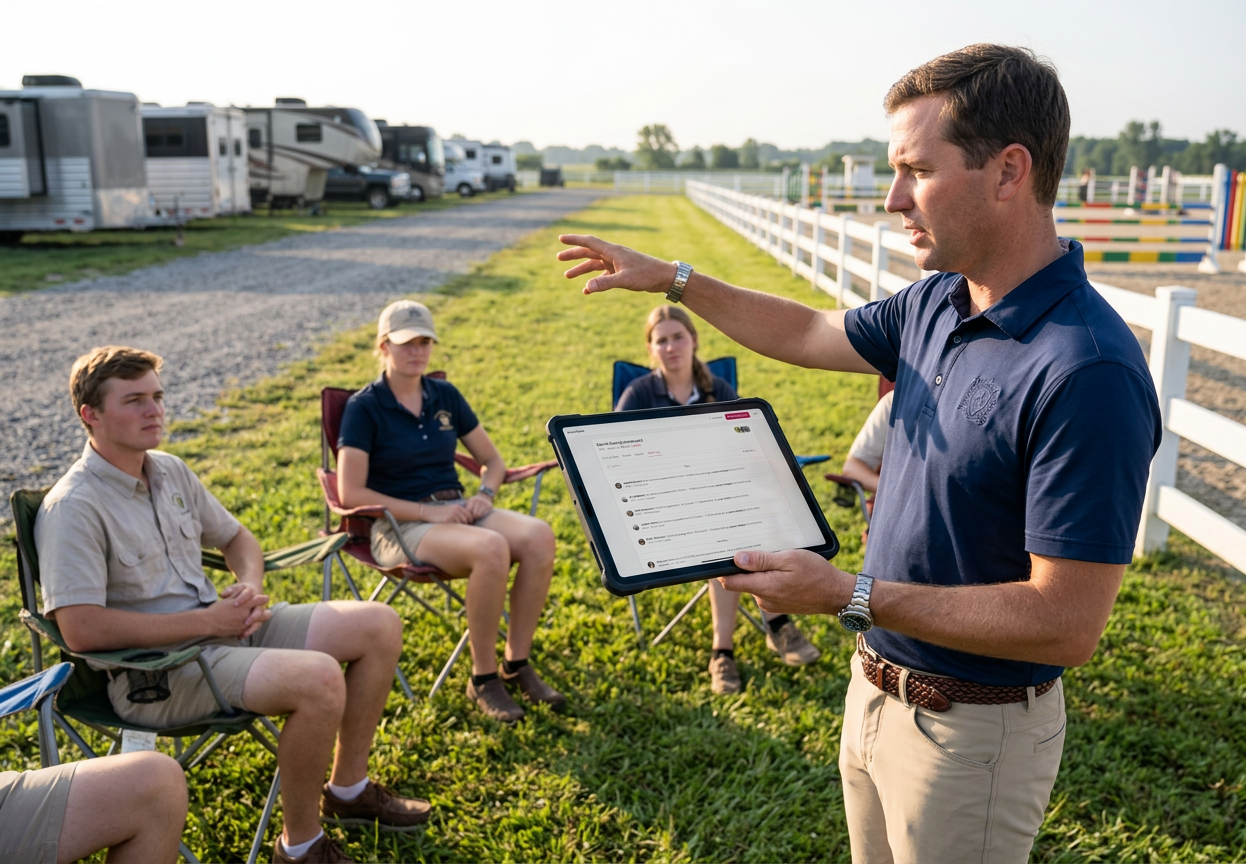
The warm-up arena is a frequent site for traffic jams. When riders are trying to enter the ring while others are trying to exit, and the in-gate person is trying to check in the next class, chaos ensues. A smart way to fix this is to implement a one-way flow. Designate a specific entrance and a separate exit for the warm-up area. This prevents nose-to-nose encounters between horses, which is a significant safety concern for green horses or pony classes.
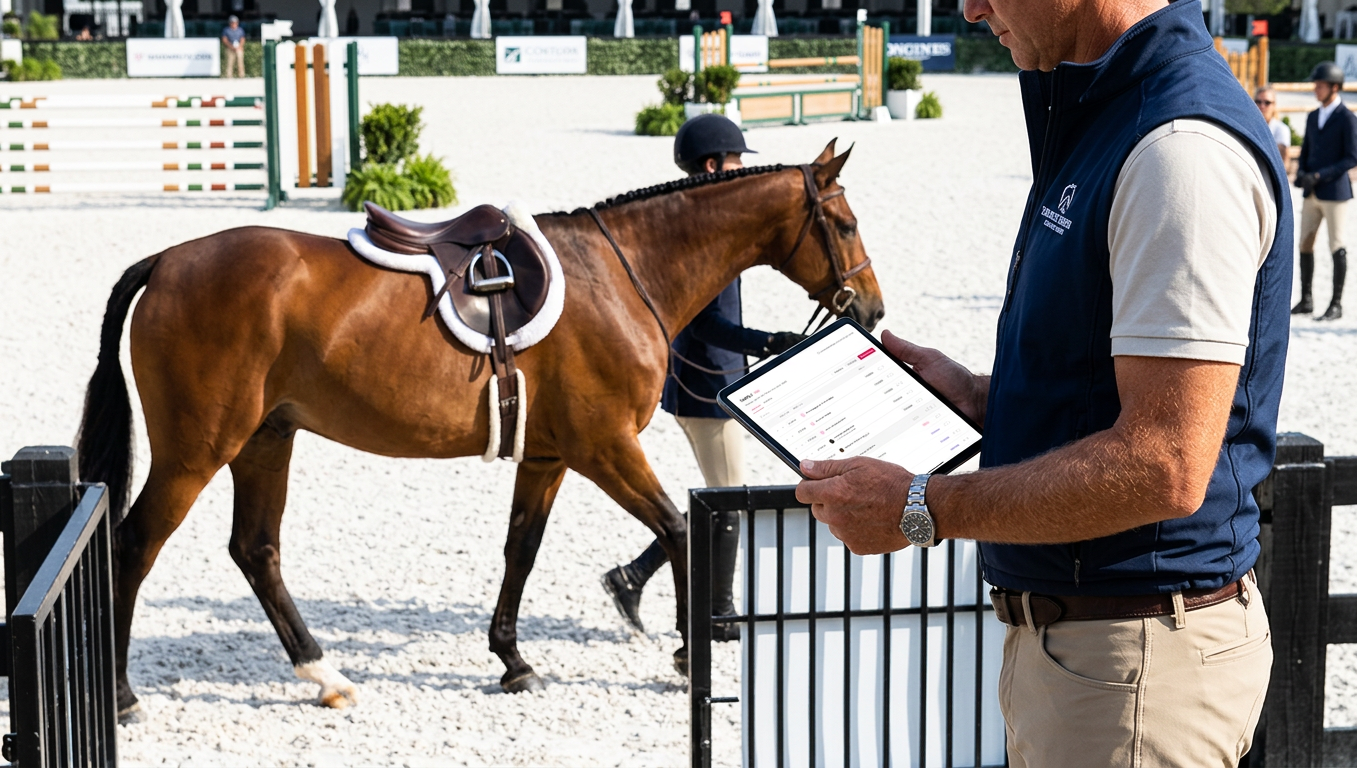
Additionally, place your class scheduling and ring management hubs in a visible but protected area. If the gate official is surrounded by a group of people asking "When is my go?", nobody can move. Digital displays or a centralized "Show Office" location can pull that crowd away from the actual gate, freeing up space for the athletes. Keeping the gate clear is essential for modern horse show ring management.
The Strategic Placement of Stabling and Parking
Arrival day is often the most stressful part of a show. As we discussed in our guide on optimizing horse show stall management, the physical distance between the trailer drop-off point and the stalls can make or break your schedule. Ideally, the path from the unhooking area to the stalls should be a straight shot. Overlapping these areas with the spectator entrance is a recipe for a 7:00 AM traffic jam.
- The Trailer Loop: Create a one-way loop for trailers so that no one has to back up a large rig in a crowded area.
- The Biosecurity Buffer: Keep visiting trailers at least 50 feet away from permanent stabling if possible to maintain health standards.
- Day-Shipper Clusters: Group day-haulers together near the warm-up rings so they do not have to lead horses through the long-term stabling area.
Why does pedestrian safety matter for your bottom line?
It is tempting to focus entirely on the horses, but spectators are vital for sponsorship valuation. If a sponsor pays for a booth, they want foot traffic. However, if that foot traffic involves constantly dodging horses, the experience is negative for everyone. Use temporary fencing or simple rope lines to create horse-free zones. This allows parents with strollers and dog owners to move freely without worrying about spooking the equine athletes.
By creating a safe environment, you encourage people to stay longer, buy more from vendors, and return next year. This is one of the simplest ways to build a recurring schooling show series that people genuinely enjoy attending.
How can technology help manage physical flow?
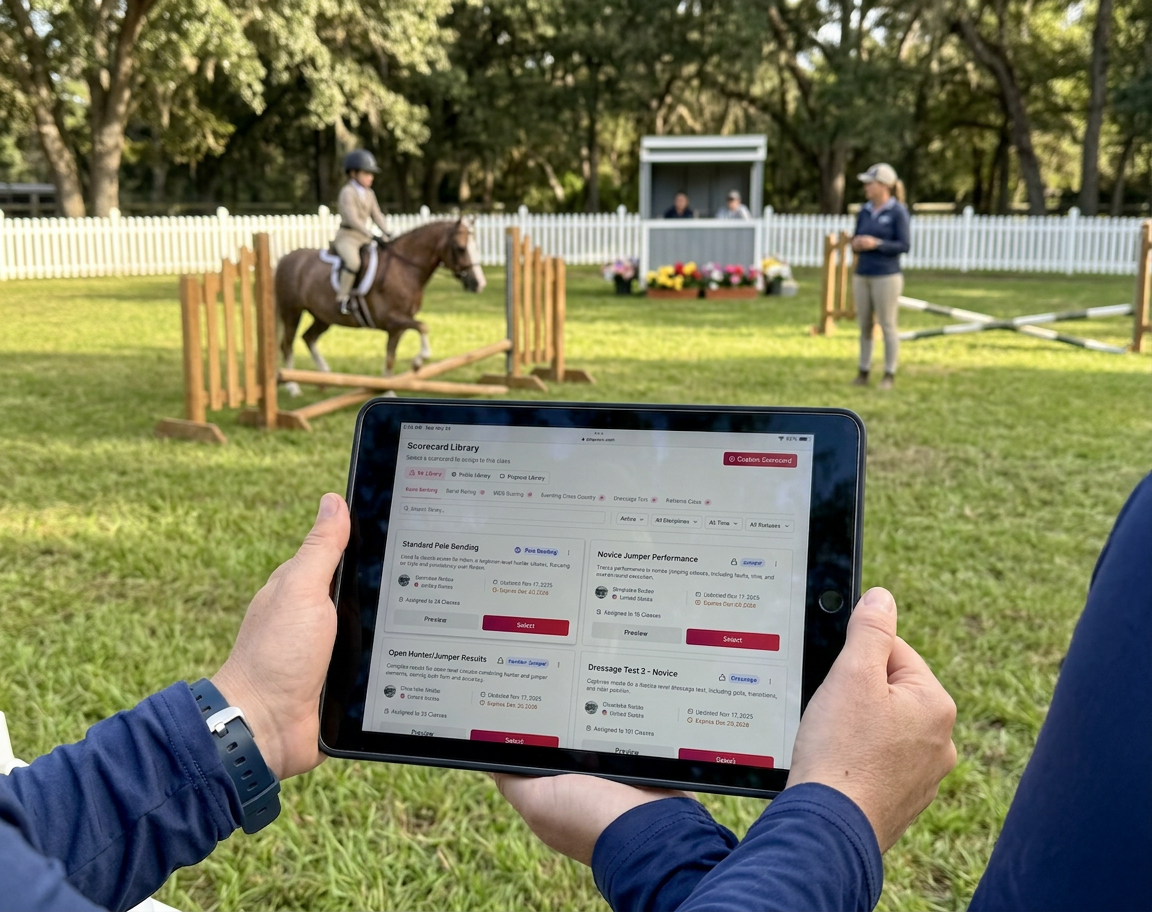
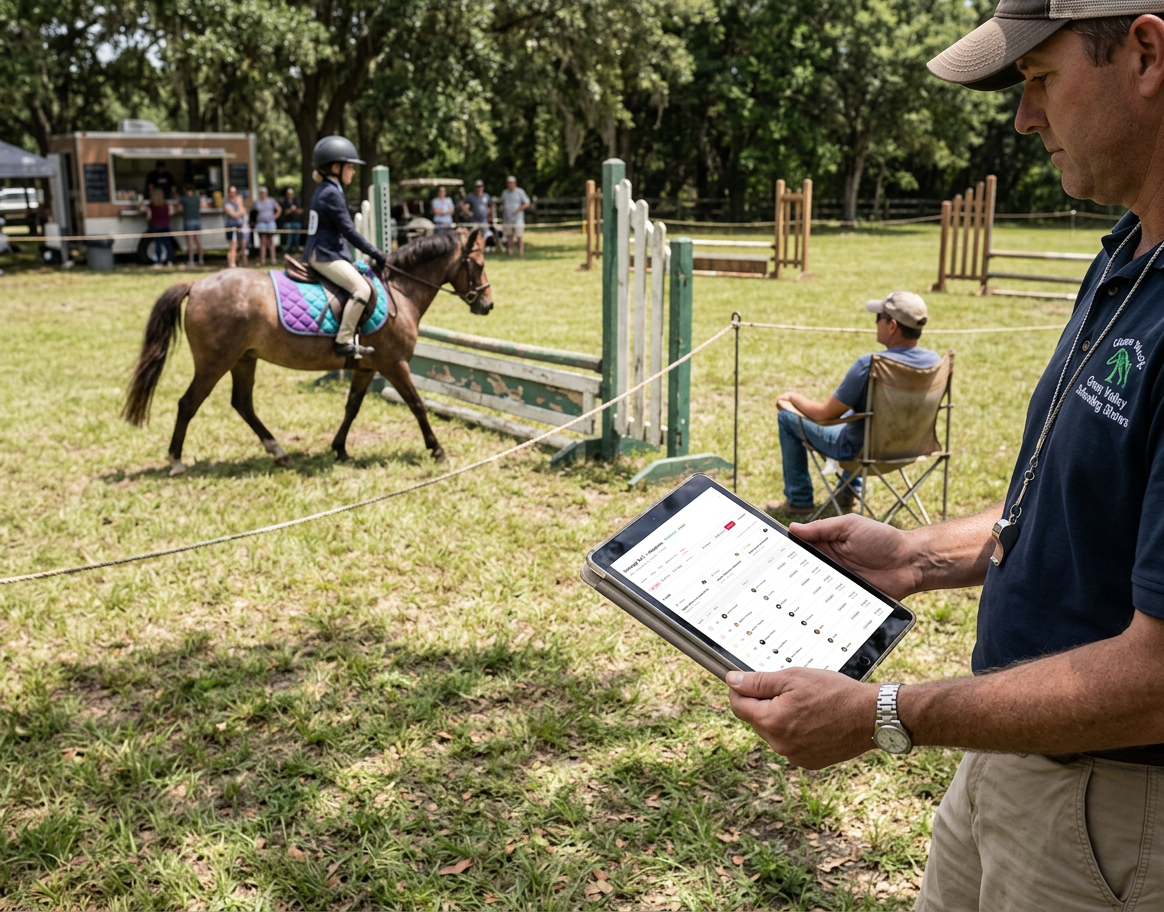
Physical signs are useful, but they are static and can be overlooked by a busy trainer. In the modern era, we use digital tools to manage flow in real-time. By utilizing live scoring and results, you keep people informed from their phones. This means they are not huddling around a paper result board near the office, creating a physical blockage in a narrow corridor.
At Pegasus, we have seen organizers use Show Hub rooms to send out arrival updates. If the parking lot is nearing capacity, a quick ping to all exhibitors can redirect incoming trailers to an overflow lot before they enter the main gates and get stuck. This kind of proactive communication is the digital equivalent of a high-visibility vest and a flashlight.
Actionable Steps for Your Next Show
- Map it out: Use a drone or satellite view to draw your current traffic flow. Use three colors for horses, cars, and people. Where do the lines cross the most? That is your primary danger zone.
- Width is your friend: Wherever possible, double the width of your gates. A 10-foot gate is a bottleneck; a 24-foot opening allows two-way traffic for horses or one large vehicle without stress.
- Signage height: Place wayfinding signs at 6 feet or higher. If signs are at waist level, they disappear once a crowd forms.
- In-gate buffer: Create a 20-foot by 20-foot holding zone just outside the competition ring gate. This keeps the next three riders ready to go without blocking the main path.
By taking the time to optimize your horse show traffic flow, you are not just making the event safer (though that is the priority) you are making it more professional. When the flow is right, the show feels calm, the horses stay settled, and you can focus on the competition rather than managing a parking lot nightmare.