 Pegasus
TL;DR
- Pre-verify health documentation like Coggins and vaccination records digitally to eliminate gate bottlenecks.
- Implement staggered arrival windows and designated unloading zones to prevent trailer traffic jams.
- Use real-time digital stall maps to allow trainers and haulers to navigate directly to their barn assignments without stopping.
Streamlining horse show arrival logistics is the foundation of a positive exhibitor experience, ensuring that hundreds of trailers can transition from the road to their stalls without hours of waiting. By prepopulating health documentation, utilizing scheduled arrival windows, and deploying digital stall maps, managers reduce stress for both staff and horses. Efficient arrivals set the tone for the entire competition week, preventing the common frustrations associated with paper-heavy check-in processes and disorganized trailer parking management.
Why Does Arrival Day Often Feel Like Chaos?
If you have ever managed a large circuit, you know the feeling of a Wednesday morning at 7:00 AM. A line of forty horse trailers stretches out to the main highway, three trainers are arguing about where their tack stalls are, and your gate staff is trying to read a blurry Coggins test through a rain-streaked window. In our experience working with multi-week circuits, this friction is usually caused by a reliance on manual, paper-based systems and a lack of communication before the rigs even pull onto the property.
At Pegasus, we view the arrival process as the first major touchpoint between your brand and the customer. If it takes three hours to get a horse off a hot trailer, the exhibitor is already frustrated before they even see a jump or a ribbon. According to the Course: How to Run and Horse Show, specific attention to traffic flow (Lesson 4) and stabling logistics (Lesson 5) is essential for maintaining safety and exhibitor satisfaction.
Digital Document Verification Before Entry
One of the biggest delays in horse show arrival logistics is the check-in at the gate. Most sanctioning bodies, including USEF, FEI, and AQHA, require proof of vaccination and negative Coggins tests. If your staff has to physically handle every sheet of paper at the gate, the line will never move.
We recommend requiring exhibitors to upload these documents during the Online entries & rider payments phase. When documents are pre-verified by the show office staff, the gate crew simply needs to check a name against a list. This prevents the scenario where a horse is turned away at the gate because of an expired certificate - a logistical nightmare for a hauler parked on a busy road.
How Can You Manage High-Volume Trailer Traffic?
Effective traffic management is a game of space and timing. You have a finite amount of driveway and a finite number of staff members to direct rigs. Managing this flow requires a proactive plan that starts weeks before the show opens. We have seen that shows utilizing digital volunteer management can better coordinate the teams needed to handle peak arrival hours.
Implementing Staggered Arrival Windows
Large events are adopting a system similar to airport arrivals. Instead of allowing all 400 trailers to arrive whenever they want, organizers can use scheduling tools to assign blocks of time. This ensures that your parking staff is not overwhelmed and that the unloading zones near the barns do not become congested.
- The 2-Hour Window: Assign trainers specific wheels (e.g., 8:00 AM - 10:00 AM).
- Off-Peak Incentives: Offer a small credit or priority stall placement for those willing to arrive during less busy times, such as Tuesday evenings.
- Communication: Send automated text alerts to trainers if the gate is clear or if there is a delay so they can pull over at a rest stop rather than idling in your driveway.
Optimizing the Unloading Zone
Nothing stops traffic faster than a trailer parked in the middle of a barn aisle while a groom slowly unloads five trunks and a refrigerator. You must designate a strict "Unloading Only" zone. Once the horses and essentials are off the trailer, the rig must be moved to long-term parking immediately. This is covered extensively in our guide to optimizing horse show stall management. By keeping the unloading zone clear, you ensure the next rig in line can pull in and start their process.
What Tools Help Staff Manage Stall Assignments?
Visibility is the enemy of confusion. If only the show manager has the paper stall map, every single person who enters the grounds has to hunt that person down. This creates a bottleneck at the show office or the manager's golf cart.
Real-time Digital Stall Maps
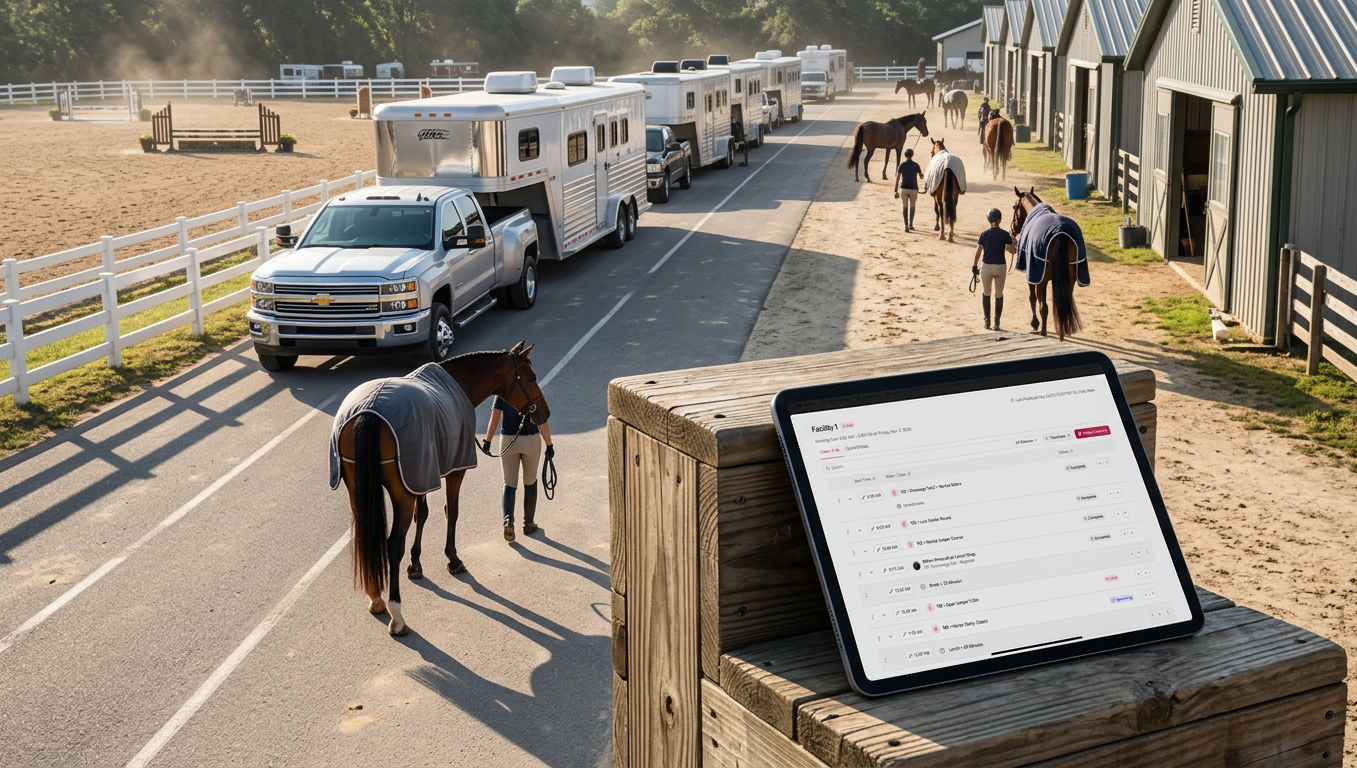
Using Stall maps & stabling allows your entire team to see exactly where every barn stands in real-time. When a hauler pulls up to the gate, the attendant can pull up the map on an iPad and tell them exactly where to go. Better yet, Pegasus allows you to share these maps with trainers in advance.
When a trainer knows they are in Barn B, Stalls 10-20, they can navigate there without stopping to ask for directions. This reduces the number of U-turns long trailers have to make on your property, which protects your footing and your grass. Modernizing this process is similar to how cloud horse show software saves time by centralizing data for the whole team.
The Role of a Dedicated Stabling Manager
For major circuits, having a dedicated stabling manager is a necessity. As outlined in Lesson 25 of the Pegasus course, this individual acts as the air traffic controller for the barns. Their responsibilities include:
- Confirming stall counts with the office before the first trailer hits the gate.
- Checking that all stalls are clean and bedded (if pre-ordered) before arrival.
- Managing the "Night Watch" transition so that horses arriving late are safely tucked in.
How Do You Maintain Safety During Peak Arrival Times?
Safety is paramount when mixing heavy machinery and livestock. We have seen organizers succeed by implementing a few strict rules. First, ensure a clear separation between spectator cars and horse trailers. Second, have an EMT on-site for the duration of the arrival window, as injuries are statistically more likely during the chaos of unloading.
Once the horse is in the stall, the logistical work is not quite done. The exhibitor still needs to finalize their entry and pick up back numbers. If you have streamlined the arrival, the show office should be the next stop. We covered how to make this phase more efficient in Mastering the Horse Show Prize List.
By moving the paperwork part of the show to a digital format, you allow your team to focus on the human side of management. Instead of arguing about a missing health certificate, they can welcome the trainer and ensure they have everything they need for a successful week. You can view a Full Pegasus feature overview to see how our tools integrate specifically with large-scale arrival needs, helping you move from a chaotic arrival day to a professional, streamlined operation.